
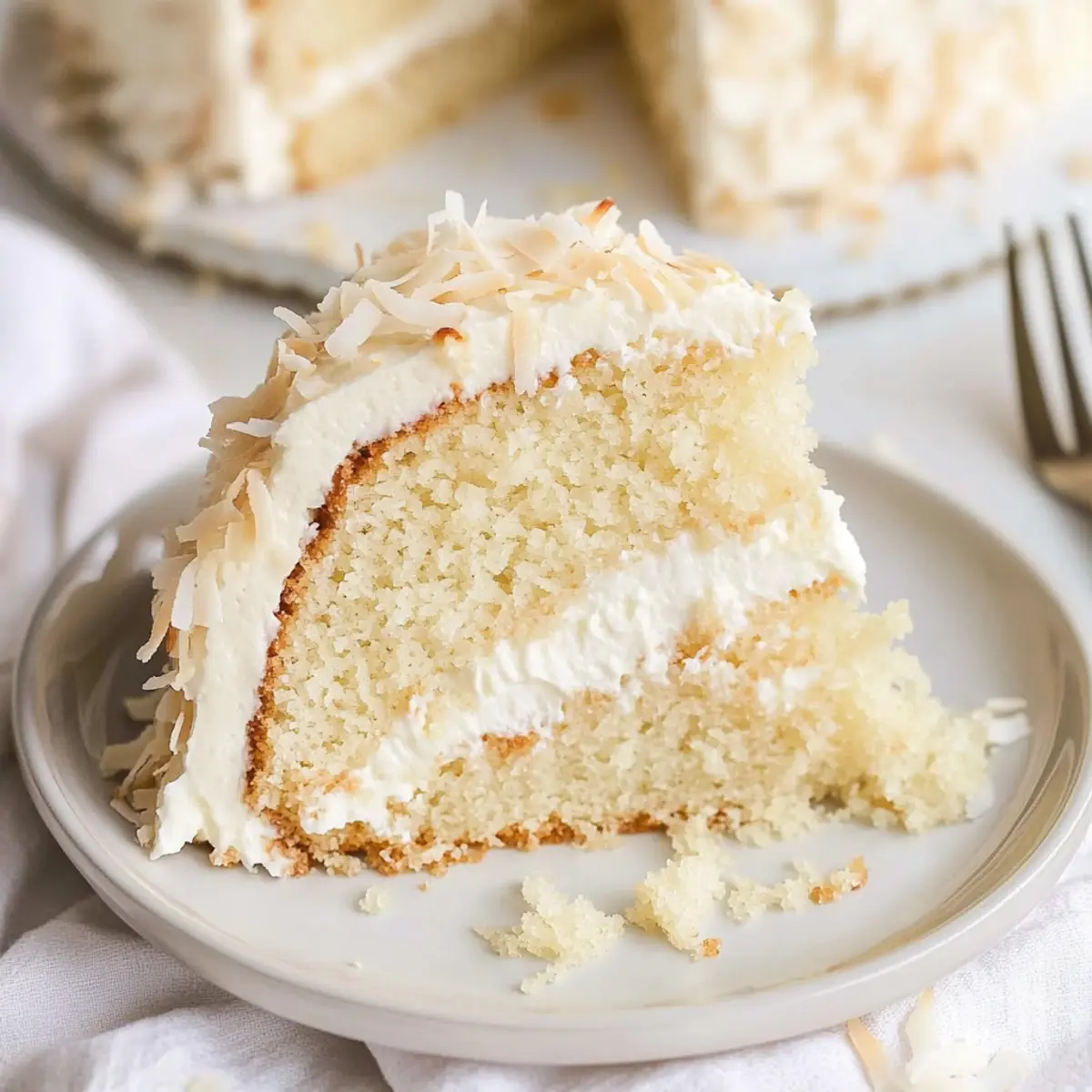
As I whisked together the ingredients for this Coconut Cake, the rich aroma of coconut wafted through my kitchen, transporting me to sun-soaked beaches and tropical getaways. This Moist Coconut Cake, paired with a luscious cream cheese frosting, is a delightful way to bring a taste of paradise to your table, whether it’s for a festive celebration or a simple afternoon treat. Not only is it a total crowd-pleaser, but its quick prep time means you can whip it up in no time, even on busy days. The fluffy texture combined with the tangy frosting creates a layered experience of flavors that truly delights. What special occasion will you serve this dreamy dessert at?
Why is Coconut Cake a Must-Try?
Fluffy Texture: The cake’s soft crumb is simply irresistible, creating a delightful contrast with the rich frosting.
Flavor Paradise: Bursting with authentic coconut flavor, each slice will transport you to a tropical oasis.
Quick to Prepare: Wondering about time? This recipe comes together quickly, making it perfect even for your busiest days.
Customizable Enjoyment: Spice it up by adding lime zest or using half coconut flour for an extra kick, ensuring it fits any occasion.
Crowd-Pleasing Dessert: This Coconut Cake is sure to impress at any gathering—pair it with fresh tropical fruit or a scoop of vanilla ice cream for a perfect finish, just like with our Moist Chantilly Cake.
Coconut Cake Ingredients
For the Cake
• Unsweetened shredded coconut – Adds coconut flavor and texture; substitute with sweetened coconut if desired, but reduce sugar.
• All-purpose flour – Provides structure; can be substituted with gluten-free flour for a 1:1 replacement.
• Baking powder – A leavening agent to help the cake rise; ensure it’s fresh for best results.
• Baking soda – Stabilizes the cake’s structure and aids browning.
• Salt – Enhances flavor and balances sweetness.
• Butter (room temperature) – Adds moisture and richness; substitute with vegan butter for a dairy-free option.
• Granulated sugar – Sweetens the cake; can be replaced with coconut sugar for a deeper flavor.
• Large eggs (room temperature) – Binds ingredients and provides moisture; use flax eggs for a vegan alternative.
• Sour cream (room temperature) – Contributes moisture and a slight tang; can be substituted with Greek yogurt.
• Full-fat coconut milk (room temperature) – Adds rich coconut flavor; almond or oat milk can be used for a lighter version.
• Vegetable oil (e.g., canola) – Improves moisture and prolongs freshness.
• Vanilla extract – Adds depth of flavor; use pure extract for the best results.
• Coconut extract (optional) – Intensifies the coconut flavor; feel free to omit if unavailable.
For the Frosting
• Butter (for frosting) – A creamy base for the frosting; same substitutions as cake butter apply.
• Full-fat cream cheese – Provides creaminess and tang in frosting; vegan cream cheese is a good alternative.
• Powdered sugar – Sweetens and stabilizes frosting; use less for a less sweet frosting.
• Coconut flakes (for decoration) – Adds texture and visual appeal; toasted coconut enhances flavor.
Step‑by‑Step Instructions for Moist Coconut Cake with Cream Cheese Frosting
Step 1: Preheat and Prepare Pans
Begin by preheating your oven to 170ºC (340ºF). While the oven warms up, line two 8-inch round baking pans with parchment paper, ensuring the bottoms are covered for easy cake removal later. This preparation will help your Coconut Cake bake evenly, leading to a perfect texture.
Step 2: Blend and Sift Dry Ingredients
In a food processor, blend the unsweetened shredded coconut until it is finely ground, which enhances its integration into the cake. Sift this coconut with all-purpose flour, baking powder, baking soda, and salt into a mixing bowl. Set this dry mixture aside, as it is crucial for creating the structure of your Coconut Cake.
Step 3: Cream Butter and Sugar
In a large mixing bowl, beat together the room-temperature butter and granulated sugar using an electric mixer on medium speed. Continue beating for about 3 minutes until the mixture is light and fluffy, appearing pale in color. This step is essential as it incorporates air, helping the cake rise beautifully during baking.
Step 4: Add Eggs Gradually
Add the large eggs to the butter and sugar mixture two at a time, allowing each pair to fully incorporate before adding the next. Mix until the batter is smooth and well combined. The eggs provide moisture and contribute to the richness of your Coconut Cake, making it delightfully fluffy.
Step 5: Mix in Wet Ingredients
Gradually add half of the dry mixture from Step 2 to the wet ingredients, mixing gently until combined. Then, pour in the sour cream, full-fat coconut milk, vegetable oil, vanilla extract, and optional coconut extract. Stir everything together, ensuring a smooth batter forms, capturing the essence of the coconut flavor.
Step 6: Combine Remaining Dry Ingredients
Add the remaining dry ingredients to the batter, folding them in gently with a spatula or wooden spoon. Be careful not to over-mix; stop once you see no visible flour. Pour the completed batter evenly into the prepared pans, smoothing the tops for an even bake.
Step 7: Bake the Cakes
Place the pans in the preheated oven and bake for 20-23 minutes, or until a cake tester inserted into the center comes out clean. Keep an eye on the cakes as they bake; they should rise and turn a beautiful golden brown. Once baked, remove the pans from the oven and allow the cakes to cool for about 10 minutes before transferring them to a wire rack.
Step 8: Prepare the Cream Cheese Frosting
While the cakes cool, prepare the frosting. In a medium bowl, cream together the room-temperature butter and full-fat cream cheese until smooth and fluffy. Then, add the vanilla extract and a tablespoon of coconut milk, mixing until well combined. This creates a creamy base for your frosting.
Step 9: Add Powdered Sugar to Frosting
Gradually mix in the powdered sugar, starting with a cup and adjusting based on your desired sweetness and consistency. Beat until everything is fully combined and the frosting is fluffy, spreading easily. This frosting will beautifully complement the moist Coconut Cake.
Step 10: Assemble the Coconut Cake
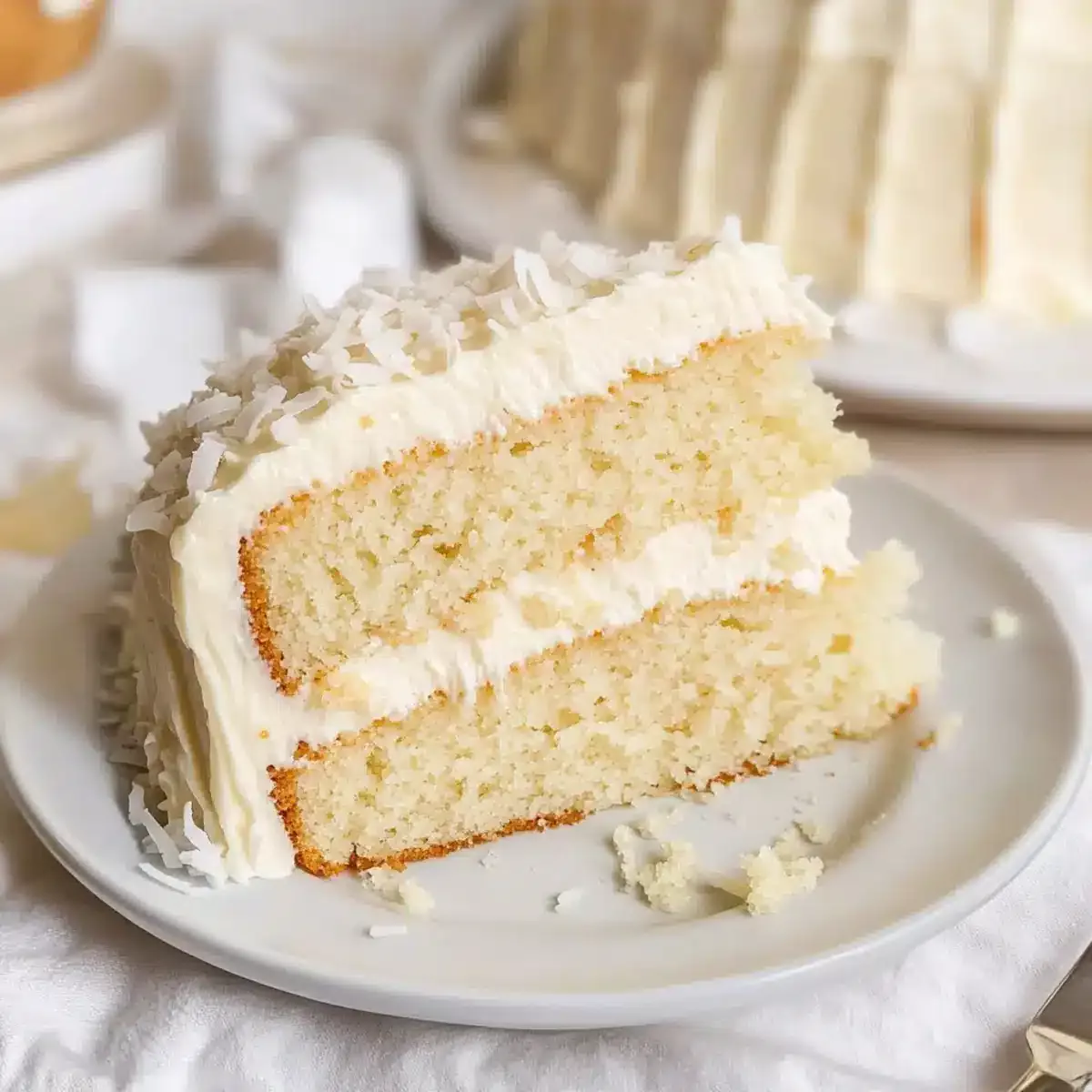
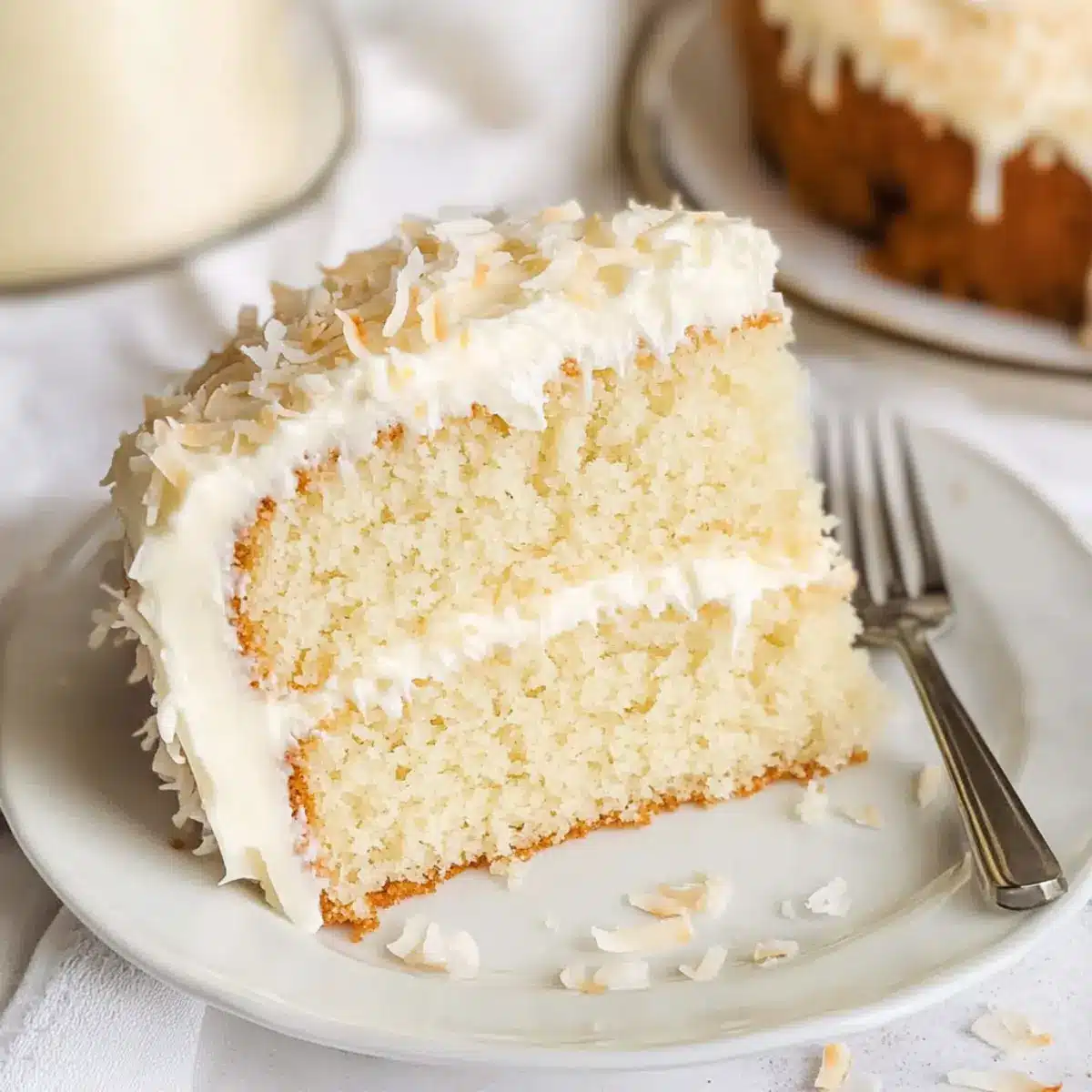
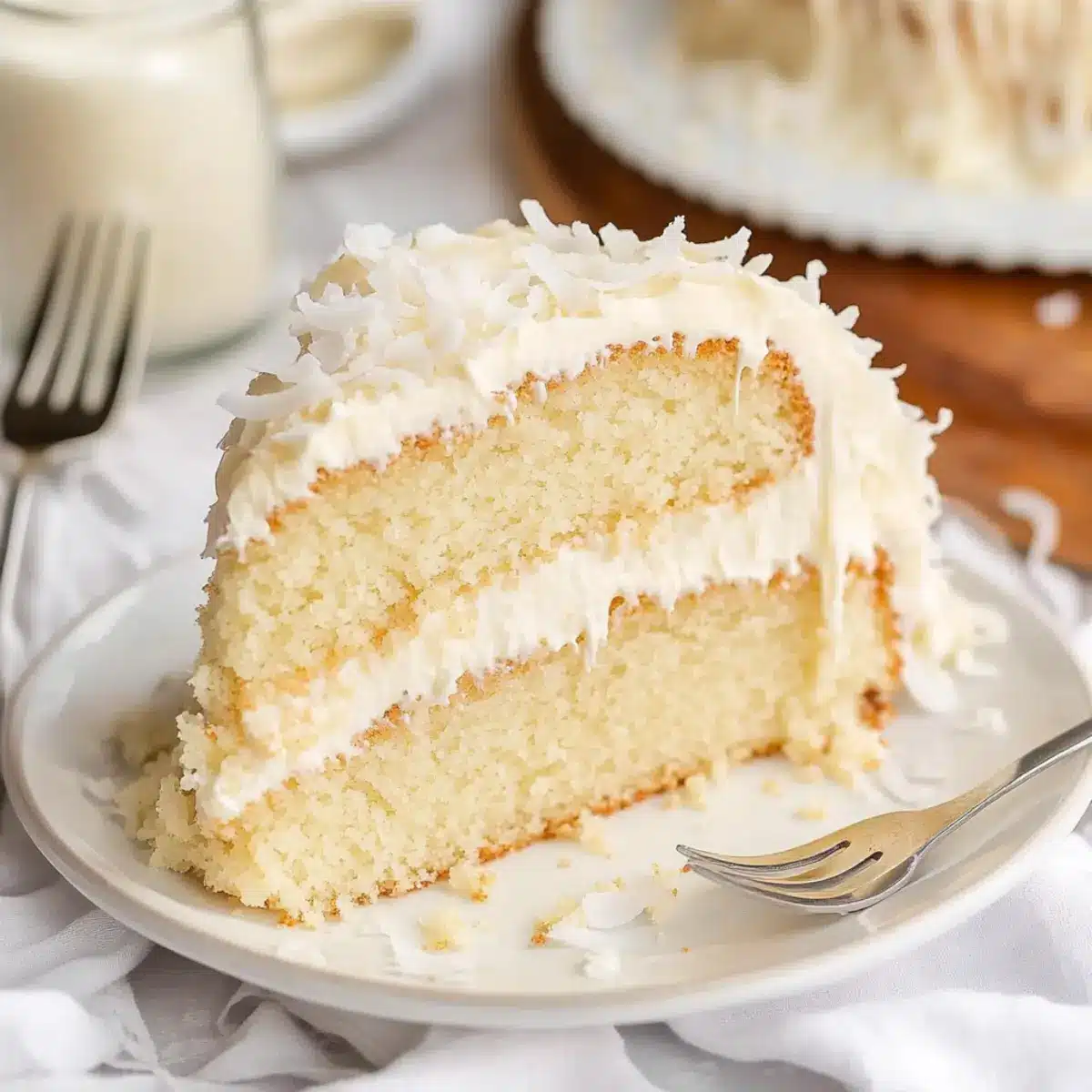
Once the cake layers have completely cooled, place one layer on a serving plate and spread a generous portion of cream cheese frosting on top. Gently place the second cake layer on top and frost the top and sides of the entire cake. Decorate with toasted coconut flakes for added texture and a lovely presentation.
Expert Tips for Moist Coconut Cake
• Room Temperature Essentials: Ensure your butter and eggs are at room temperature for optimal mixing, which helps create that fluffy texture in your Coconut Cake.
• Avoid Over-Mixing: Once you add the flour, mix until just combined. Over-mixing can result in a dense cake instead of a light, airy one.
• Fresh Baking Powder: Always check that your baking powder is fresh. Stale baking powder can prevent your cake from rising properly, ruining the texture.
• Testing for Doneness: Use a cake tester or toothpick to check if your Coconut Cake is done. It should come out clean with no wet batter clinging to it.
• Let it Cool: Allow the cakes to cool in the pans for about 10 minutes before transferring them to a wire rack to cool completely. This helps prevent them from breaking apart.
• Frosting Consistency: When making the cream cheese frosting, gradually add powdered sugar to achieve your preferred sweetness and thickness, ensuring it complements the moist Coconut Cake perfectly.
What to Serve with Moist Coconut Cake
Indulging in this moist and fluffy dessert sets the stage for a delightful meal experience that dances on your palate.
-
Tropical Fruit Salad: Fresh pineapple, mango, and kiwi add a burst of sweetness and a refreshing, light contrast to the cake.
-
Vanilla Ice Cream: A scoop of velvety vanilla ice cream melts on the warm cake, enhancing its tropical flavors and adding creaminess.
-
Coconut-Lime Rice Pudding: This indulgent dessert echoes the coconut notes while introducing a zesty twist, making it a perfect companion for your cake.
-
Toasted Macadamia Nuts: The crunchy texture and nutty flavor elevate the dish, adding wonderful contrast to the cake’s soft crumb.
-
Mint Mojito: A refreshing mint and lime drink brightens the palate and complements the cake’s tropical essence beautifully, perfect for spirited gatherings.
-
Chocolate Ganache Drizzle: A rich chocolate sauce adds an unexpected luxurious touch, creating a delicious flavor interplay with the coconut.
-
Mango Sorbet: For a dairy-free option, this sorbet’s fruitiness not only refreshes but also balances the cake’s sweetness, delightfully enlivening the taste experience.
-
Coffee or Espresso: A bold cup of coffee enhances the cake’s flavor profile, creating a satisfying ending to your meal alongside the tropical sweetness.
Coconut Cake Variations & Substitutions
Feel free to explore these delicious alternatives and toppings that can elevate your Coconut Cake experience!
-
Lime Zest: Brighten up your cake by adding freshly grated lime zest to the batter for a zesty twist that complements the coconut beautifully.
-
Coconut Flour: For a deeper coconut flavor, substitute half of the all-purpose flour with coconut flour; remember, this will absorb more moisture, so adjust liquid accordingly.
-
Dairy-Free: Use vegan butter and dairy-free cream cheese for a completely dairy-free dessert that doesn’t sacrifice taste. Enjoy this cake guilt-free for your vegan friends!
-
Nutty Crunch: Fold chopped toasted macadamia nuts or walnuts into the batter. The added crunch will create a delightful texture contrast in your moist cake.
-
Spicy Kick: Add a pinch of cayenne pepper or ground ginger to the batter for an unexpected spicy note that balances the sweetness wonderfully.
-
Lemon Cake: Replace coconut milk with buttermilk and add lemon zest for a refreshing citrusy flavor. This twist gives the cake a whole new profile to enjoy!
-
Chocolate Drizzle: Drizzle melted dark chocolate over the frosted cake for a dessert that combines tropical and decadent flavors. This can also be a great pairing if you’re serving alongside our Coconut Crusted Fish for a themed dinner!
-
Fruity Layers: Consider layering the cake with fresh pineapple or mango slices for an added burst of flavor and freshness between the cake layers. It creates a tropical fiesta; just like our Crockpot Thai Coconut Chicken Soup.
Make Ahead Options
These Coconut Cake layers are perfect for meal prep, allowing you to enjoy a delightful dessert even on your busiest days! You can bake the cake layers up to 24 hours in advance. Once cooled, wrap each layer tightly in plastic wrap to keep them fresh and prevent drying out. The cream cheese frosting can also be prepared up to 3 days ahead; just store it in an airtight container in the refrigerator. When you’re ready to serve, simply allow the frosting to soften at room temperature, then assemble the cake by frosting and decorating with toasted coconut flakes. This way, your Coconut Cake remains just as delicious with minimal effort!
How to Store and Freeze Coconut Cake
Room Temperature: Store the Coconut Cake at room temperature for up to 3 days, keeping it covered with plastic wrap or in an airtight container to maintain its moisture.
Fridge: If you want to extend its life, refrigerate the cake wrapped in plastic for up to a week. Bring to room temperature before serving for the best taste.
Freezer: To freeze, wrap individual slices or the whole cake in plastic wrap, then aluminum foil, and store for up to 3 months. Thaw in the fridge overnight when ready to enjoy.
Reheating: If serving chilled, allow the Coconut Cake to sit out for about 30 minutes before serving to enhance the flavors and texture.
Coconut Cake Recipe FAQs
How do I choose the right coconut for my Coconut Cake?
Absolutely! For the best flavor and texture in your Coconut Cake, look for unsweetened shredded coconut. This type provides a wonderful coconut flavor without added sweetness that can affect the cake’s balance. If you prefer a sweeter taste, you can use sweetened coconut, but remember to reduce the sugar in the recipe to compensate.
What’s the best way to store leftover Coconut Cake?
You can store your Coconut Cake at room temperature for up to 3 days, ensuring it’s covered with plastic wrap or in an airtight container to prevent it from drying out. If you want to extend its freshness, wrap the cake securely and place it in the refrigerator, where it can last up to a week. Remember to bring it back to room temperature before serving for the best flavor!
Can I freeze my Coconut Cake, and if so, how?
Definitely! To freeze your Coconut Cake, first ensure it’s completely cooled. Wrap individual slices or the whole cake tightly in plastic wrap, followed by a layer of aluminum foil to protect against freezer burn. You can enjoy your cake for up to 3 months this way. When you’re ready to indulge, simply thaw it in the refrigerator overnight and allow it to sit at room temperature for about 30 minutes before serving.
What if my Coconut Cake doesn’t rise properly?
If your Coconut Cake doesn’t rise, it could be due to stale baking powder, which is essential for the leavening process. Always check the freshness of your baking powder before use. Also, ensure you don’t over-mix the batter once the flour is added, as this can lead to a dense cake. A clean cake tester inserted into the center of the cake is a good indicator of doneness; if it comes out clean, your cake should be perfectly risen!
Are there any dietary considerations for making this Coconut Cake?
Very! If you’re accommodating dietary preferences, you can replace the butter with vegan butter for a dairy-free option, and the large eggs can be substituted with flax eggs (1 tablespoon of ground flaxseed mixed with 2.5 tablespoons of water per egg). For the cream cheese frosting, vegan cream cheese is a great alternative that maintains that delicious creaminess. Feel free to adjust the ingredients to meet various dietary needs while keeping the delightful flavors intact!
Irresistibly Moist Coconut Cake with Creamy Dream Frosting
Ingredients
Equipment
Method
- Preheat your oven to 170ºC (340ºF) and line two 8-inch round baking pans with parchment paper.
- Blend unsweetened shredded coconut in a food processor until finely ground. Sift coconut with all-purpose flour, baking powder, baking soda, and salt into a mixing bowl.
- In a large mixing bowl, beat room-temperature butter and granulated sugar using an electric mixer on medium speed for about 3 minutes until light and fluffy.
- Add eggs gradually to the butter and sugar mixture, mixing until the batter is smooth and well combined.
- Gradually add half of the dry mixture to the wet ingredients, then stir in sour cream, full-fat coconut milk, vegetable oil, vanilla extract, and coconut extract until combined.
- Fold in the remaining dry ingredients gently, pour the batter into prepared pans, and smooth the tops.
- Bake for 20-23 minutes or until a cake tester comes out clean, then allow to cool for 10 minutes before transferring to a wire rack.
- In a medium bowl, cream together room-temperature butter and full-fat cream cheese until smooth. Add vanilla extract and a tablespoon of coconut milk, mixing until combined.
- Gradually mix in powdered sugar until desired sweetness and consistency is achieved, beating until fully combined and fluffy.
- Once cake layers are completely cooled, place one layer on a serving plate, spread cream cheese frosting, then add the second layer and frost the top and sides. Decorate with toasted coconut flakes.
Leave a Reply