
As I was tending to the remnants of last night’s dinner, a lightbulb flickered above my head: why not transform that delicious Korean beef bulgogi into something even more delightful? Enter the Quick & Hearty Korean Beef Bulgogi Stew. This recipe takes leftover bulgogi and whips it into a comforting bowl of warmth in just 15 minutes, perfect for those who crave hearty flavors without the hassle. Filled with sweet potato glass noodles that soak up the rich sesame-soy broth, it’s a delightful twist aimed at busy weeknights or cozy solo dinners. This stew not only brings together friends and family around the table, but it also allows you to minimize food waste in style. Are you ready to turn yesterday’s dinner into today’s culinary masterpiece? Let’s dive in!
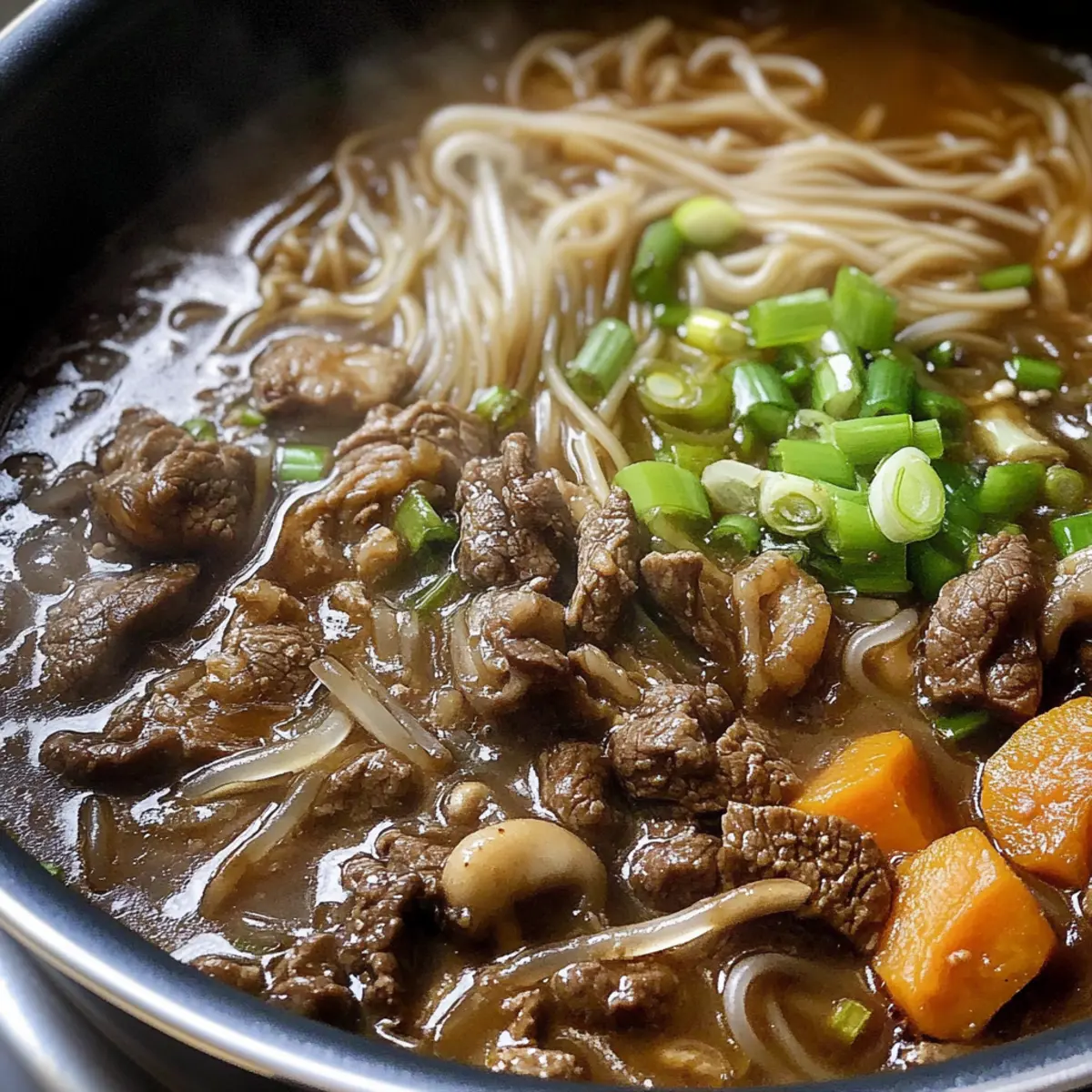
Why is this stew a must-try?
Comforting warmth: This Quick & Hearty Korean Beef Bulgogi Stew is like a warm hug in a bowl, perfect for chilly nights.
Transform leftovers effortlessly: Turn yesterday’s bulgogi into a gloriously rich stew in just 15 minutes.
Chewy noodles galore: The sweet potato glass noodles soak up all that flavorful broth, making every bite comforting and satisfying.
Versatile and customizable: Easily adjust ingredients to suit your taste; try adding bok choy or a splash of gochujang for an exciting twist.
Crowd-pleaser: Serve it with steamed rice and classic banchan like kimchi for a well-rounded meal that everyone will love.
Korean Beef Bulgogi Stew Ingredients
For the Stew
- Korean Beef Bulgogi – Adds sweet-savory flavor and richness to the stew. Can use freshly marinated bulgogi if leftovers are unavailable.
- Sweet Potato Glass Noodles (Dangmyeon) – Provides a chewy texture and soaks up the broth, making the dish hearty. Substitute with rice noodles, udon, or ramen if needed.
- Enoki Mushrooms – Contributes a delicate earthiness and adds a tender-crisp texture. Other mushroom types can be used as a substitute.
- Green Onions – Offers freshness and mild onion flavor for garnish. Can replace with chives or shallots for a different finish.
For the Broth
- Water or Beef Broth – Serves as the base for the broth; using beef stock enhances the flavor.
- Sesame Oil – Adds depth and nutty flavor; can be replaced with peanut oil for a different note.
- Dark Soy Sauce – Provides umami and adds color to the stew. Regular soy sauce may be used, though it may alter the color slightly.
Step‑by‑Step Instructions for Korean Beef Bulgogi Stew
Step 1: Soak Noodles
Begin by filling a large bowl with warm water and adding the sweet potato glass noodles. Allow the noodles to soak for about 15 minutes or until they become pliable. You’ll know they’re ready when they are tender but still have a slight chewiness. This step ensures the noodles absorb the delicious flavors of the stew when combined.
Step 2: Cook Beef
In a medium pot over medium heat, add your leftover Korean Beef Bulgogi. Stir occasionally, warming it through for about 3-5 minutes until it’s heated evenly. Once hot, fold in the dark soy sauce and sesame oil, allowing the flavors to meld together beautifully. You’ll smell the rich, savory aroma wafting through your kitchen, beckoning you to the next step.
Step 3: Add Liquid
Pour in 4 cups of water or beef broth into the pot, stirring well to combine. Increase the heat to high and bring the mixture to a rapid boil. This should take about 3-5 minutes. As it comes to a boil, you’ll see bubbles breaking the surface, indicating that the broth is ready for the next ingredients, enhancing the stew’s depth of flavor.
Step 4: Combine Noodles & Veggies
Once the broth is boiling, carefully add the soaked sweet potato glass noodles and enoki mushrooms to the pot. Gently stir the mixture and let it cook for 2-3 minutes until the noodles are fully cooked and the mushrooms have softened. The glass noodles will absorb the savory broth, making the Korean Beef Bulgogi Stew even more comforting.
Step 5: Garnish & Serve
After the noodles and mushrooms are cooked, remove the pot from heat. Serve the stew hot in bowls, topping each serving with freshly chopped green onions for a vibrant finish. The stew should look rich and inviting, filling your kitchen with its delightful aroma, perfect for enjoying the cozy warmth it offers.
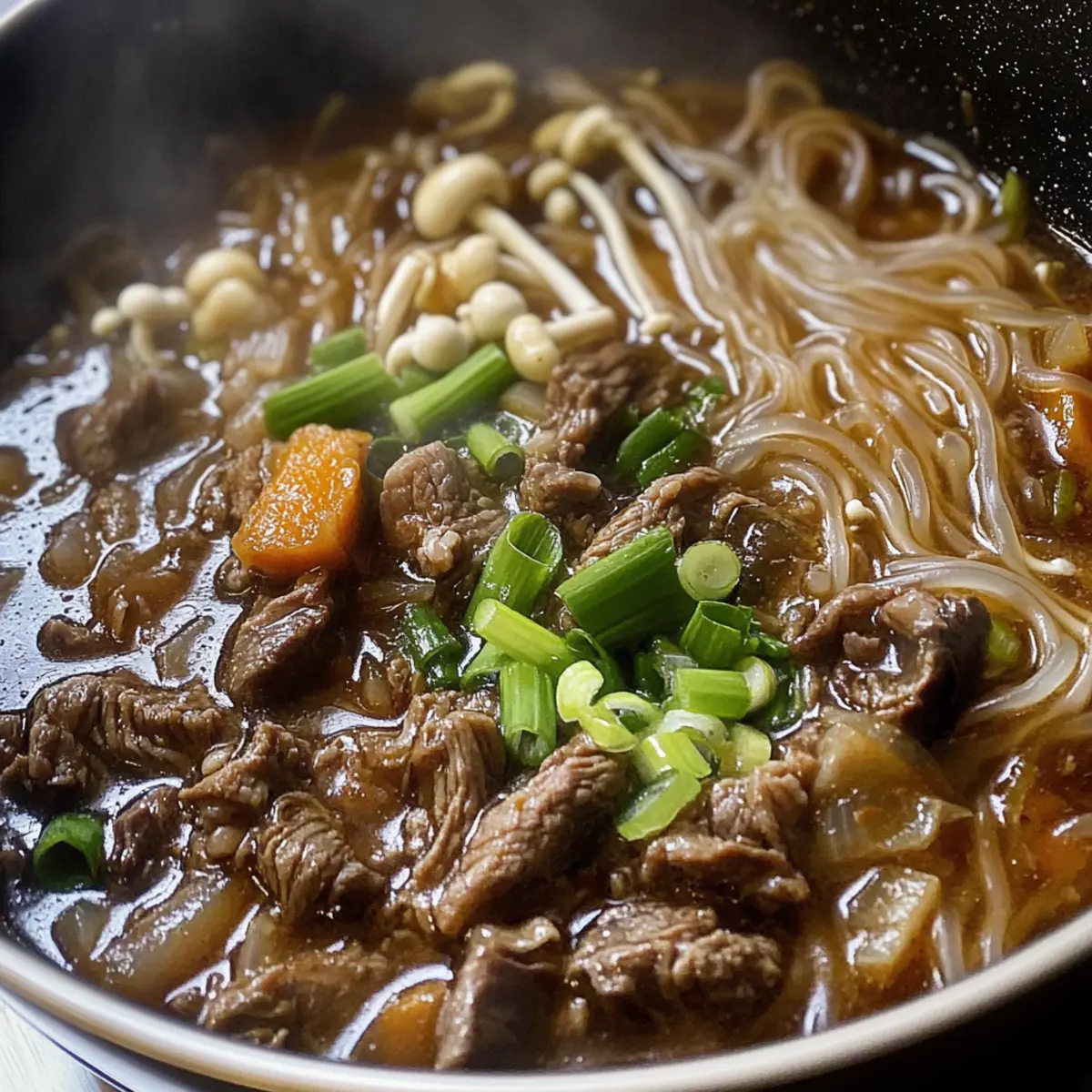
How to Store and Freeze Korean Beef Bulgogi Stew
Fridge: Keep your Korean Beef Bulgogi Stew in an airtight container for up to 3 days. When ready to enjoy, simply reheat on the stovetop or in the microwave.
Freezer: If you want to save your stew for longer, freeze it in a freezer-safe container for up to 2 months. Make sure to leave some space for expansion.
Reheating: When reheating from the fridge or freezer, add a little broth or water to avoid the noodles becoming mushy. Heat gently until warmed through.
Make-Ahead Tips: If preparing in advance, store noodles separately and add just before serving to maintain their texture in the Korean Beef Bulgogi Stew.
Korean Beef Bulgogi Stew Variations
Feel free to personalize your stew and make it your own with these delicious twists!
-
Dairy-Free: Omit any dairy products, and enjoy a clean, rich flavor with the original ingredients.
This dish is naturally dairy-free, ensuring everyone can enjoy it happily! -
Vegetarian-Friendly: Swap out the beef for tofu or tempeh marinated in soy sauce.
This variation adds wonderful protein and a boost of plant-based goodness to the stew. -
Extra Veggies: Toss in bok choy, bell peppers, or spinach for added nutrition and color.
These vegetables create a vibrant dish and enhance the chewiness of your stew. -
Creamy Twist: Stir in a splash of coconut milk for a rich, creamy broth.
The coconut milk brings a lovely sweetness that complements the savory flavors. -
Spicy Kick: Add a teaspoon of gochujang or a sprinkle of chili flakes to heat things up.
This extra spice will awaken your taste buds and make the dish exciting! -
Noodle Swap: Try udon or ramen noodles instead of glass noodles for a different texture.
Each noodle type will add a unique bite that enhances the overall experience. -
Mushroom Medley: Use shiitake or portobello mushrooms instead of enoki for a meatier texture.
This substitution brings an earthy depth to the stew that mushroom lovers will adore.
For a remarkable meal, serve this hearty stew alongside your favorite Korean banchan or a side of kimchi to round out the experience. If you’re in the mood for some delightful experiments in the kitchen, you might also enjoy making some Korean Rice Balls or indulging in the sweetness of Korean Milk Cream. Happy cooking!
What to Serve with Quick & Hearty Korean Beef Bulgogi Stew
The perfect meal is all about balance, and these delightful pairings will enhance your comforting bowl of stew in every way.
-
Steamed Jasmine Rice: A fragrant accompaniment that soaks up the rich broth perfectly, making each bite a flavor-packed experience.
-
Kimchi: This tangy, fermented side adds a delightful crunch and spice, contrasting beautifully with the smoothness of the stew.
-
Korean Fried Zucchini (Hobakjeon): Lightly battered and crispy, these slices add a different texture and fresh, vegetal note to your meal.
-
Pickled Radishes: These crunchy, slightly sweet pickles provide a bright, refreshing contrast to the savory stew, making each bite exciting.
-
Gochujang Dipping Sauce: A spicy-sweet sauce to dab on your side dishes brings an extra layer of flavor to your cozy dinner.
-
Sesame Spinach Salad: A vibrant salad dressed with sesame oil, providing a fresh and nutty flavor that balances the richness of the stew.
For a delightful drink pairing, consider Korean Pear Juice: The sweet, crisp notes of this juice complement the savory elements of the stew while refreshing your palate.
These options create a harmonious spread that invites family and friends to gather, savor, and enjoy every bite.
Expert Tips for Korean Beef Bulgogi Stew
-
Soak Noodles Properly: Ensure the sweet potato glass noodles are soaked long enough for the right texture. They should be pliable but still a bit chewy to absorb the flavors well.
-
Control the Saltiness: If you’re sensitive to salt, consider using low-sodium soy sauce. This adjustment allows you to enjoy the savory depth without overwhelming the dish.
-
Vegetable Flexibility: Feel free to use whatever vegetables you have on hand. Bok choy or bell peppers can add a delightful crunch and additional flavors to your Korean Beef Bulgogi Stew.
-
Reheat Wisely: If you’re reheating leftovers, add a splash of water or broth to prevent the noodles from becoming mushy. This keeps the stew fresh and satisfying.
-
Spice it Up: For those who enjoy a kick, adding chili flakes or a splash of gochujang can elevate the flavors, bringing an exciting heat to your comforting bowl of stew.
Make Ahead Options
These Quick & Hearty Korean Beef Bulgogi Stew are perfect for meal prep enthusiasts! You can prepare the Korean Beef Bulgogi and store it in the refrigerator up to 3 days in advance, allowing the flavors to deepen. To maintain quality, refrigerate the beef in an airtight container. The sweet potato glass noodles can also be soaked and stored in water for up to 24 hours. When you’re ready to enjoy, simply warm the bulgogi, add the broth, and cook with the soaked noodles and enoki mushrooms for 2-3 minutes until heated through. This way, you’ll have a delightful stew ready with minimal effort, making busy weeknights so much easier!
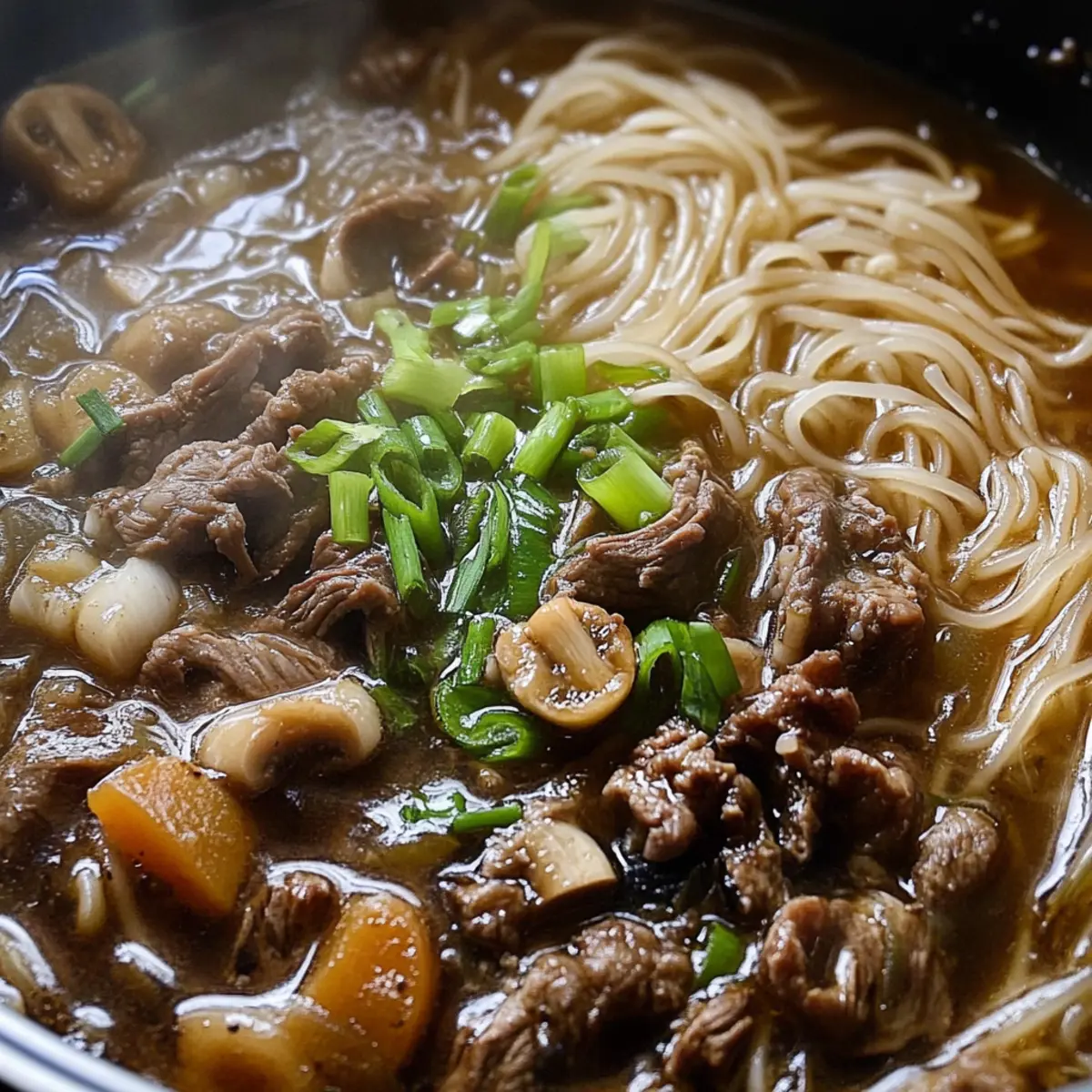
Korean Beef Bulgogi Stew Recipe FAQs
What type of Korean Beef Bulgogi should I use?
You can use leftover Korean Beef Bulgogi for this recipe, as it saves time and enhances flavor. If you don’t have leftovers, freshly marinated bulgogi can be prepared quickly and substituted instead.
How should I store leftover Korean Beef Bulgogi Stew?
Store the stew in an airtight container in the refrigerator for up to 3 days. When ready to reheat, warm it on the stovetop over low heat or in the microwave, adding a splash of water or broth to keep it from becoming too thick.
Can I freeze Korean Beef Bulgogi Stew?
Absolutely! To freeze the stew, pour it into a freezer-safe container, leaving some room for expansion, and store it for up to 2 months. When you’re ready to enjoy it again, thaw it in the fridge overnight before reheating.
What if the sweet potato glass noodles are mushy?
To avoid mushy noodles, soak them only until pliable—about 15 minutes. If they do become mushy, the next time you make the stew, try adding the noodles later in the cooking process, just a few minutes before serving to maintain a firmer texture.
Are there any dietary considerations I should be aware of?
If you have dietary concerns, like gluten intolerance, check the labels on your soy sauce and noodles. You can substitute with gluten-free soy sauce and rice noodles for a delicious and adaptable version of the Korean Beef Bulgogi Stew. Always ensure your ingredients match your dietary needs!
Can pets eat Korean Beef Bulgogi Stew?
It’s best to avoid feeding your pets any human food containing garlic, onions, or any high-fat meats. If you’d like to share the beef with your furry friends, serve them plain cooked meat without any seasoning or sauce from the stew to ensure their health.
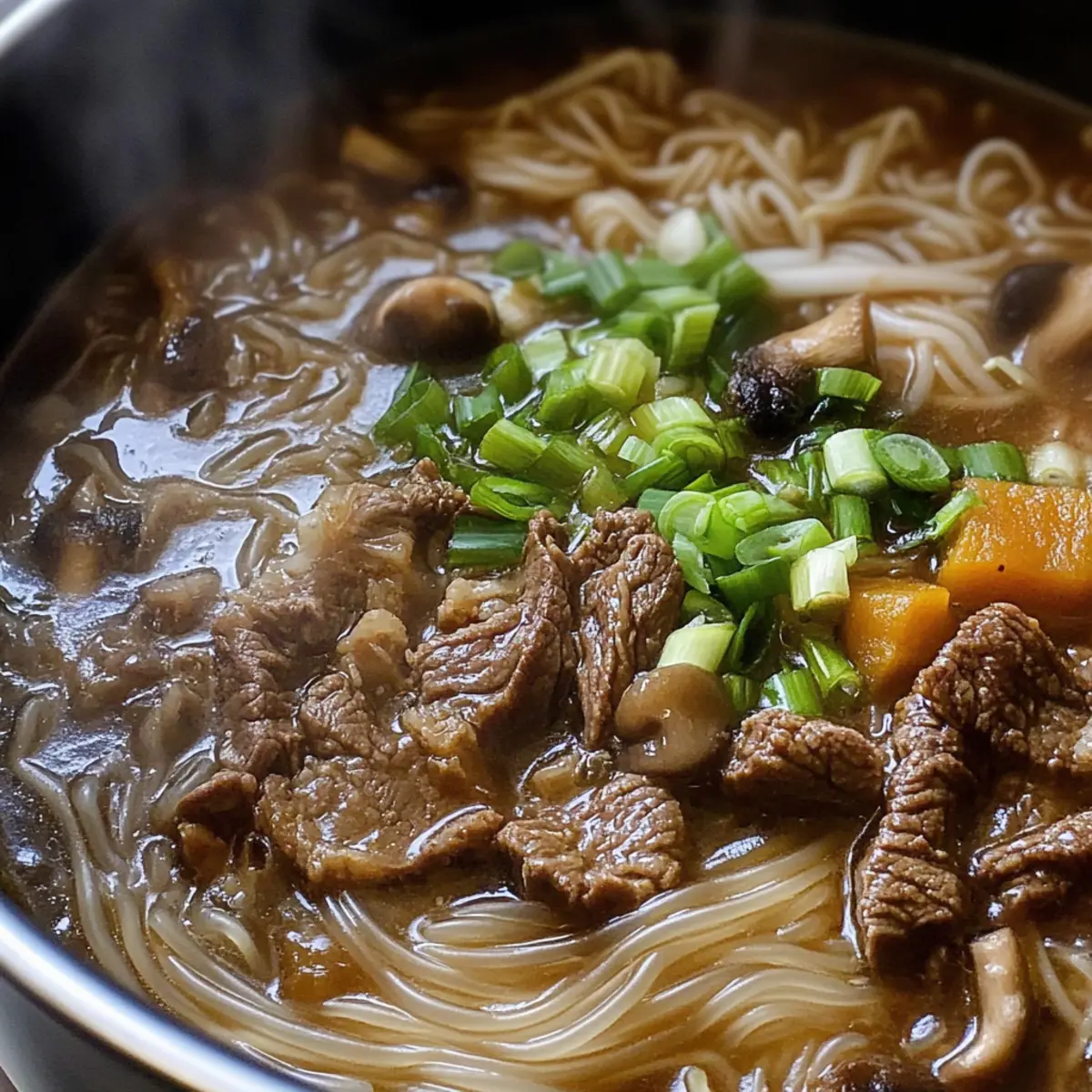
Cozy Korean Beef Bulgogi Stew Ready in 15 Minutes
Ingredients
Equipment
Method
- Soak the sweet potato glass noodles in warm water for about 15 minutes until they become pliable.
- In a medium pot over medium heat, add the leftover Korean Beef Bulgogi and stir occasionally for 3-5 minutes.
- Pour in 4 cups of water or beef broth, stir well, and bring to a rapid boil.
- Once boiling, add the soaked noodles and enoki mushrooms, and cook for 2-3 minutes.
- Remove from heat and garnish with chopped green onions before serving hot.
Leave a Reply