
There’s a delightful comfort in a steaming bowl of soup, especially when it’s quick and easy to make. That’s exactly what you get with my Gochujang Chickpea Soup, a vibrant vegan dish that comes together in just 30 minutes. Packed with protein and fiber, this hearty soup not only satisfies but also keeps you feeling energized and warm on those busy weeknights. The magic lies in the spicy undertones of gochujang, which elevates the classic chickpea soup to a flavorful new level. Whether you’re a seasoned home-chef or just starting on your culinary adventure, this recipe will inspire you to swap out fast food for something homemade and nourishing. Are you ready to dive into the cozy world of hearty soups?
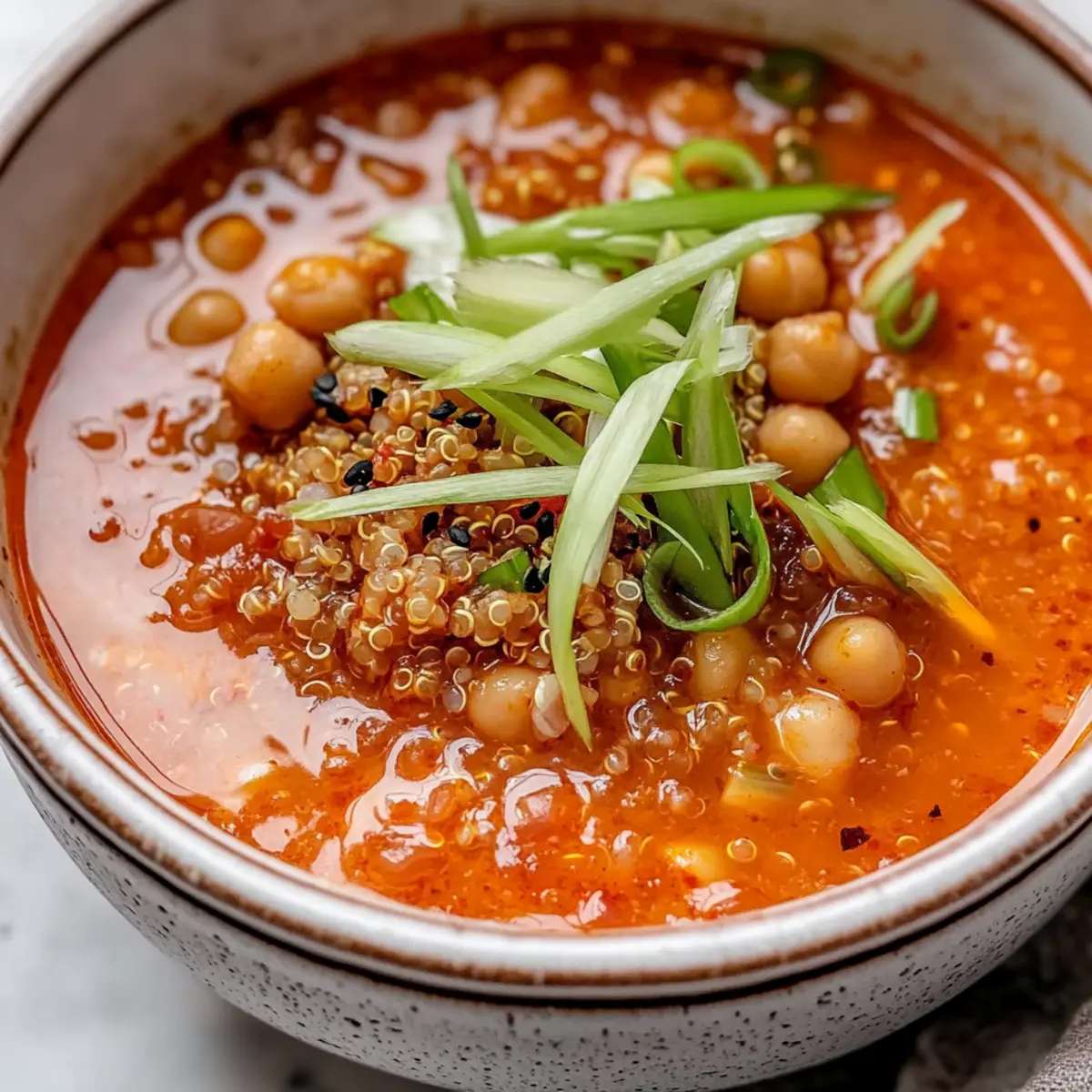
Why Is Gochujang Chickpea Soup Amazing?
Quick Preparation: This recipe comes together in just 30 minutes, making it perfect for busy weeknights when you crave something hearty but don’t have hours to cook.
Vegan Delight: It’s entirely plant-based, providing a wholesome alternative that’s perfect for vegans and anyone seeking lighter meals.
Protein-Packed: With chickpeas and quinoa, this soup offers a satisfying protein boost, keeping you fueled and full without the heaviness of fast food.
Versatile Flavor: The savory kick from gochujang adds a unique twist, making it a delightful option that intrigues your taste buds and warms your soul. If you enjoy global flavors, you’ll love discovering how this spice can change your soups!
Easy Variations: Want to switch it up? You can substitute the chickpeas for lentils or toss in your favorite greens. Just like my Wonton Soup Cozy or Shrimp Corn Soup, it’s all about finding your perfect balance!
Gochujang Chickpea Soup Ingredients
For the Soup Base
• Avocado Oil – Adds richness and helps sauté the vegetables; substitute with olive oil for a different flavor.
• Onions – Provides a savory base flavor; no substitutes necessary, but shallots can offer a milder taste.
• Carrots – Adds sweetness and vibrant color; you can replace them with bell peppers for a unique twist.
• Celery – Contributes to the soup’s texture; fennel can be used as an alternative if preferred.
• Jalapeño – Offers a spicy kick; reduce heat by using just half or deseeding before adding.
• Garlic – Essential for aroma; fresh is best, but powdered garlic works in a pinch.
• Ginger – Provides warmth and depth of flavor; fresh ginger is ideal while ground can be used as a substitute.
For the Heartiness
• Gochujang – Adds a unique savory and spicy depth to the soup; don’t substitute, look for gluten-free versions if needed.
• Chickpeas – A protein-packed heartiness; canned are convenient, but dried can be used if pre-cooked.
• Quinoa – Adds texture and extra protein; rice works as a substitute if preferred.
For the Broth and Flavor
• Broth (vegan chicken bouillon) – The base liquid for the soup; vegetable broth yields a milder flavor.
• Miso Paste – Infuses umami after cooking; tahini can substitute in a pinch.
• Sesame Oil – Adds a finishing touch of flavor; toasted sesame oil enhances it even further.
• Scallions – Used as a fresh garnish to brighten the soup; chives can work if you’re in a pinch.
Step‑by‑Step Instructions for Gochujang Chickpea Soup
Step 1: Sauté the Vegetables
In a medium saucepan, heat 2 tablespoons of avocado oil over medium heat. Once shimmering, add 1 diced onion, 1 diced carrot, 1 diced celery stalk, and 1 chopped jalapeño. Sauté these vegetables with a pinch of salt for about 5–7 minutes, until they soften and the onions become translucent, releasing their aromatic flavors.
Step 2: Add Aromatics
Now stir in 3 minced garlic cloves and 1 tablespoon of freshly grated ginger. Cook this mixture for an additional 1–2 minutes, allowing the garlic to turn fragrant and golden. Keep stirring to prevent burning, and enjoy the savory scents wafting through your kitchen—it’s the start of your Gochujang Chickpea Soup’s depth of flavor!
Step 3: Incorporate Gochujang
Add 2 tablespoons of gochujang to your sautéed veggies, stirring well to coat everything evenly. Sauté this mixture for another minute, allowing the gochujang to bloom and intensify in flavor. The vibrant color of the paste will deepen, hinting at the warming spice that will soon envelop your soup.
Step 4: Add the Heartiness
Introduce 1 can of drained chickpeas and 1/2 cup of rinsed quinoa to the pot, followed by 4 cups of vegan chicken bouillon or broth. Sprinkle in 1 teaspoon each of coriander and thyme for herbal notes. Bring this hearty mixture to a boil over medium-high heat, then reduce to a simmer, partially covering the pot. Let it cook for 15 minutes until the quinoa is tender.
Step 5: Stir in Miso and Season
While the soup simmers, mix 2 tablespoons of miso paste with 1/4 cup of water in a separate small bowl until smooth. Once the 15 minutes have passed, stir the miso mixture into the soup, ensuring it’s well incorporated. Add 1 tablespoon of sesame oil for an aromatic finish, and taste to adjust saltiness if needed.
Step 6: Garnish and Serve
Ladle the Gochujang Chickpea Soup into bowls and top with chopped scallions for a fresh pop of color and flavor. Serve it warm, perhaps alongside some crusty bread or over a bed of rice, to fully immerse yourself in this comforting, nourishing vegan delight.
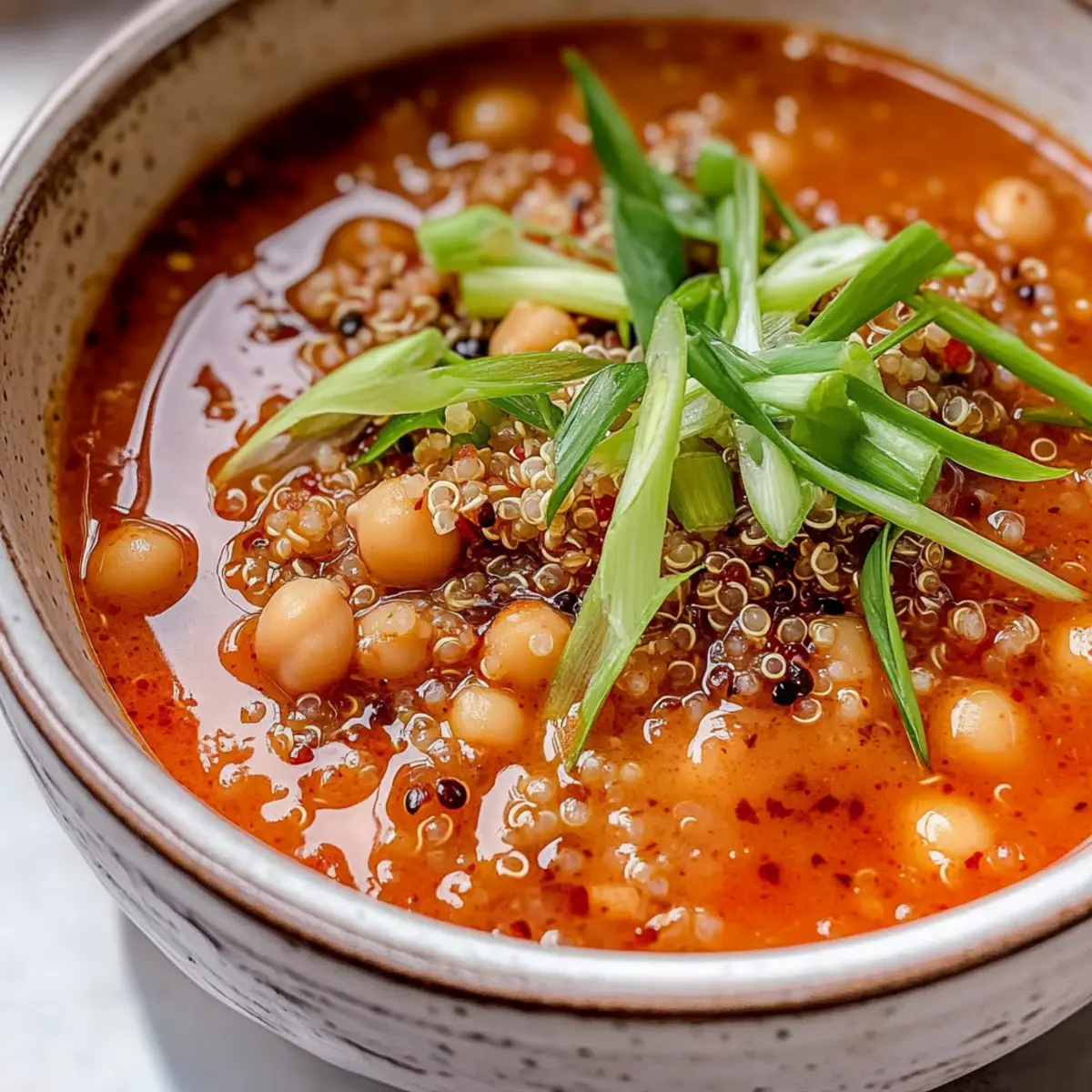
Expert Tips for Gochujang Chickpea Soup
-
Vegetable Sautéing: Sautéing the vegetables and aromatics before adding liquids enhances the flavor depth of your Gochujang Chickpea Soup and builds a rich base.
-
Adjusting Spice Level: If you’re sensitive to heat, start with half the recommended gochujang. You can always add more later, ensuring a welcoming dish for all palates.
-
Texture Considerations: If you wish to add extra veggies like spinach or zucchini, be mindful of the broth’s consistency—consider adding a splash more to maintain balance.
-
Chickpea Alternatives: Feel free to replace chickpeas with lentils or white beans for variety, allowing for different flavors while maintaining that hearty feel.
-
Storage Tips: Leftover Gochujang Chickpea Soup can be stored in the fridge for up to 5 days and freezes well for up to 3 months, perfect for meal prep!
What to Serve with Gochujang Chickpea Soup
There’s something magical about creating a complete meal around a warm bowl of soup, where every side complements the flavors of your dish and invites a delightful dining experience.
- Crusty Bread: Freshly baked bread is perfect for dipping, soaking up the flavorful broth while adding a delightful texture contrast.
- Quinoa Salad: A light, refreshing quinoa salad full of greens and citrus can brighten your meal and enhance the soup’s flavors.
- Roasted Vegetables: Sweet and caramelized veggies like sweet potatoes and Brussels sprouts bring depth and richness alongside the soup’s warmth.
- Pickled Vegetables: The crisp tang of pickled veggies adds a lively crunch, cutting through the richness of the soup while introducing vibrant flavors.
- Coconut Rice: Fluffy coconut-infused rice provides a subtly sweet and creamy base; it harmonizes beautifully with the spicy soup.
- Chili Garlic Noodles: Tossed with a touch of heat, these noodles offer a delightful bite that matches the soup’s spicy notes.
- Cucumber Kimchi: This fermented side dish brings cooling freshness to balance the soup’s warmth while enhancing the umami flavors.
- Herbal Tea: A soothing cup of mint or ginger tea can cleanse the palate and provides a warm drink to complement your meal.
- Chocolate Avocado Mousse: For dessert, a rich and creamy mousse serves as a luscious finale that pairs wonderfully with the soup’s savory depth.
Gochujang Chickpea Soup Variations
Feel free to let your creativity shine and customize your Gochujang Chickpea Soup with these delightful variations!
-
Lentils: Substitute chickpeas with lentils for a different flavor profile. Lentils cook quickly and soak up the gochujang’s spiciness beautifully.
-
Leafy Greens: Toss in a few handfuls of spinach or kale towards the end of cooking for added nutrients and a pop of color. The greens wilt beautifully, infusing the soup with health and vibrance.
-
Crispy Tofu: Add stir-fried crispy tofu as a topping just before serving. It brings a lovely texture contrast and an extra protein kick.
-
Extra Spicy: Crank up the heat by doubling the amount of gochujang or adding some crushed red pepper flakes. Perfect for those chilly evenings when you want something fiery to warm you up!
-
Herb Blend: Introduce different herb blends like fresh basil or cilantro for a refreshing twist. These herbs complement the soup pleasantly, enhancing its flavor profile.
-
Coconut Milk: For extra creaminess, stir in a splash of coconut milk just before serving. This adds a delightful richness and balances the heat from the gochujang.
-
Rice: Instead of quinoa, use cooked rice to change up the texture. Jasmine or brown rice works wonderfully, making your soup even heartier.
For more exciting flavors, you might want to explore other comforting recipes like Chicken Noodle Soup or the sweet and savory Crockpot Thai Soup. Dive in and find your perfect combination!
Make Ahead Options
Preparing your Gochujang Chickpea Soup in advance is a game-changer for busy weeknights! You can chop the vegetables (onions, carrots, celery, jalapeño) up to 24 hours ahead and store them in an airtight container in the fridge to maintain freshness. Additionally, cook the quinoa and refrigerate it for up to 3 days if you prefer to save time during the final assembly. When you’re ready to enjoy your soup, simply sauté the prepped veggies, add the gochujang, chickpeas, broth, and cooked quinoa, then follow the remaining steps as usual. This way, you’ll have a delicious, nourishing meal with just a bit of prep instead of overwhelming kitchen tasks!
How to Store and Freeze Gochujang Chickpea Soup
Fridge: Store leftover Gochujang Chickpea Soup in an airtight container for up to 5 days. Let the soup cool completely before sealing it to maintain freshness.
Freezer: For longer storage, freeze the soup in portions for up to 3 months. Use freezer-safe containers and leave some space at the top for expansion.
Reheating: When ready to enjoy, reheat on the stove over medium heat, stirring occasionally, or microwave until steaming hot. If it’s thick, add a splash of water or broth for consistency.
Thawing: For frozen soup, thaw in the fridge overnight before reheating. If you’re in a hurry, place the container in cold water to speed up the thawing process.
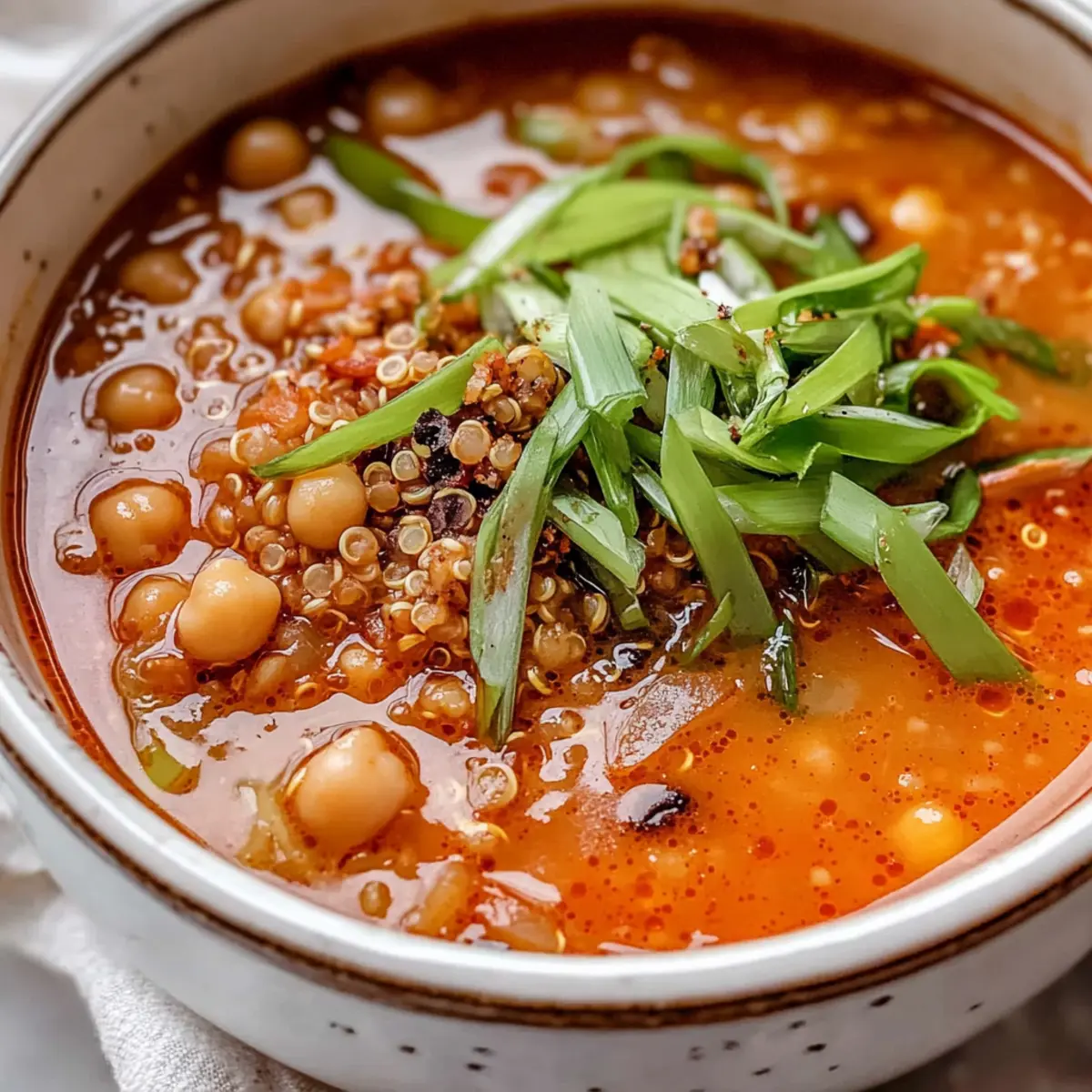
Gochujang Chickpea Soup Recipe FAQs
What type of chickpeas should I use for this recipe?
You can use canned chickpeas for convenience, as they are already cooked and ready to go. If you prefer dried chickpeas, make sure to soak them overnight and cook them until tender before adding to the soup.
How long can I store the Gochujang Chickpea Soup in the fridge?
Absolutely! You can store the soup in an airtight container in the fridge for up to 5 days. Just let it cool completely before sealing to keep it fresh.
Can I freeze Gochujang Chickpea Soup?
Very much so! Freeze the soup in portions for up to 3 months in freezer-safe containers. Remember to leave some space at the top of the container for any expansion during freezing.
How do I reheat this soup if it’s frozen?
For best results, thaw the soup overnight in the fridge. When ready to eat, reheat it on the stove over medium heat, stirring occasionally, until steaming hot. If it’s a bit thick, add a splash of water or broth to reach your desired consistency.
Can I adjust the spice level if I’m sensitive to heat?
Absolutely! If you’re worried about the spice level from the gochujang, start with just 1 tablespoon instead of the recommended amount. You can always add more later to suit your taste!
What are some common substitutions I can use in this recipe?
You can replace chickpeas with lentils or white beans for protein variety. Also, if you’re out of quinoa, brown rice is a nice alternative. For vegetables, kale or spinach can be added for extra nutrients at the end of cooking, ensuring they stay vibrant and fresh.
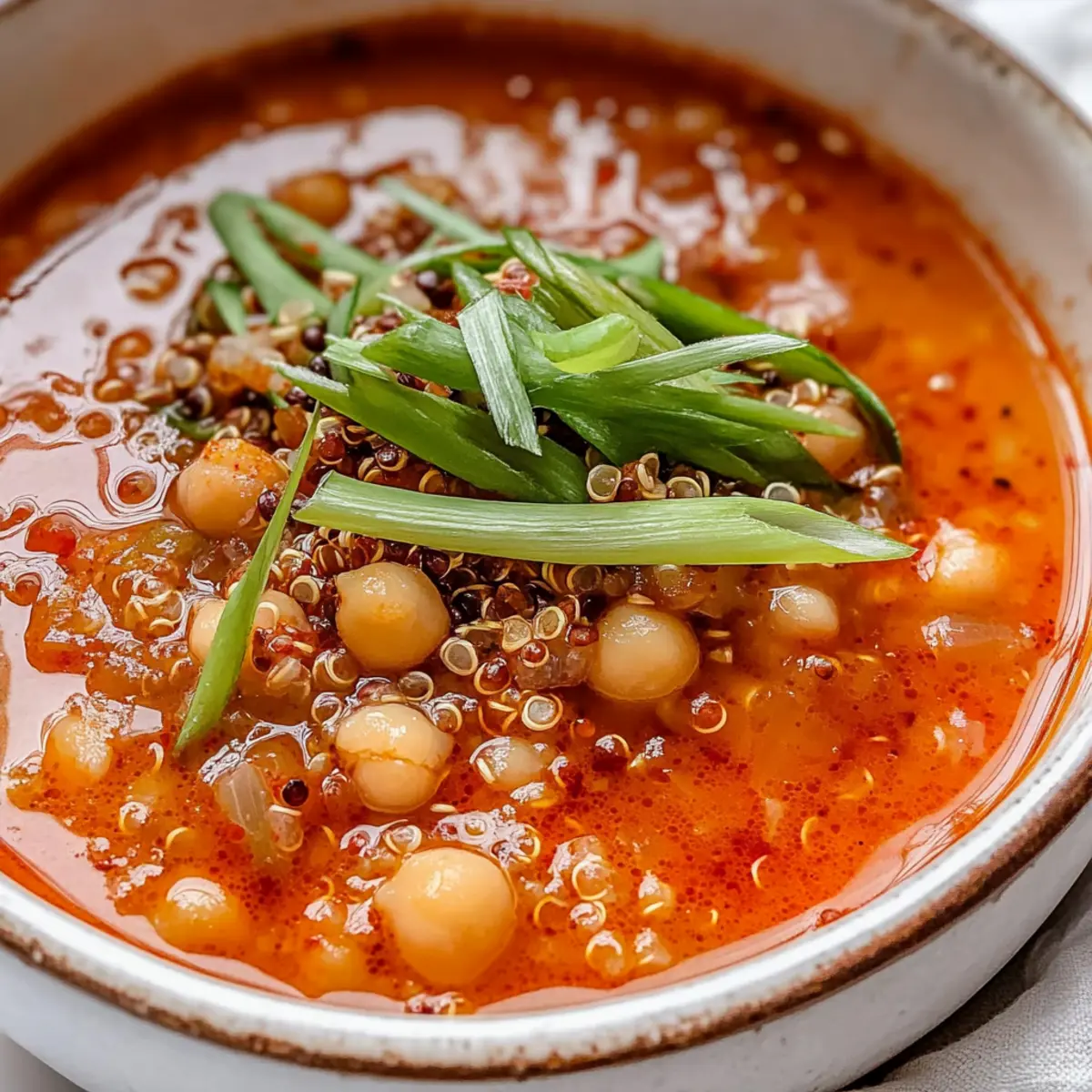
Cozy Gochujang Chickpea Soup for a Hearty Vegan Delight
Ingredients
Equipment
Method
- In a medium saucepan, heat 2 tablespoons of avocado oil over medium heat. Add 1 diced onion, 1 diced carrot, 1 diced celery stalk, and 1 chopped jalapeño. Sauté for 5–7 minutes until softened.
- Stir in 3 minced garlic cloves and 1 tablespoon freshly grated ginger. Cook for an additional 1–2 minutes until fragrant.
- Add 2 tablespoons of gochujang, stirring well to coat. Sauté for another minute to bloom the flavors.
- Introduce 1 can of drained chickpeas and 1/2 cup rinsed quinoa, followed by 4 cups of vegan chicken bouillon. Add 1 teaspoon each of coriander and thyme, bring to a boil, then simmer for 15 minutes.
- Mix 2 tablespoons of miso paste with 1/4 cup of water until smooth, then stir into the soup. Add 1 tablespoon sesame oil for finish.
- Ladle the soup into bowls, garnish with scallions, and serve warm with crusty bread or over rice.
Leave a Reply