
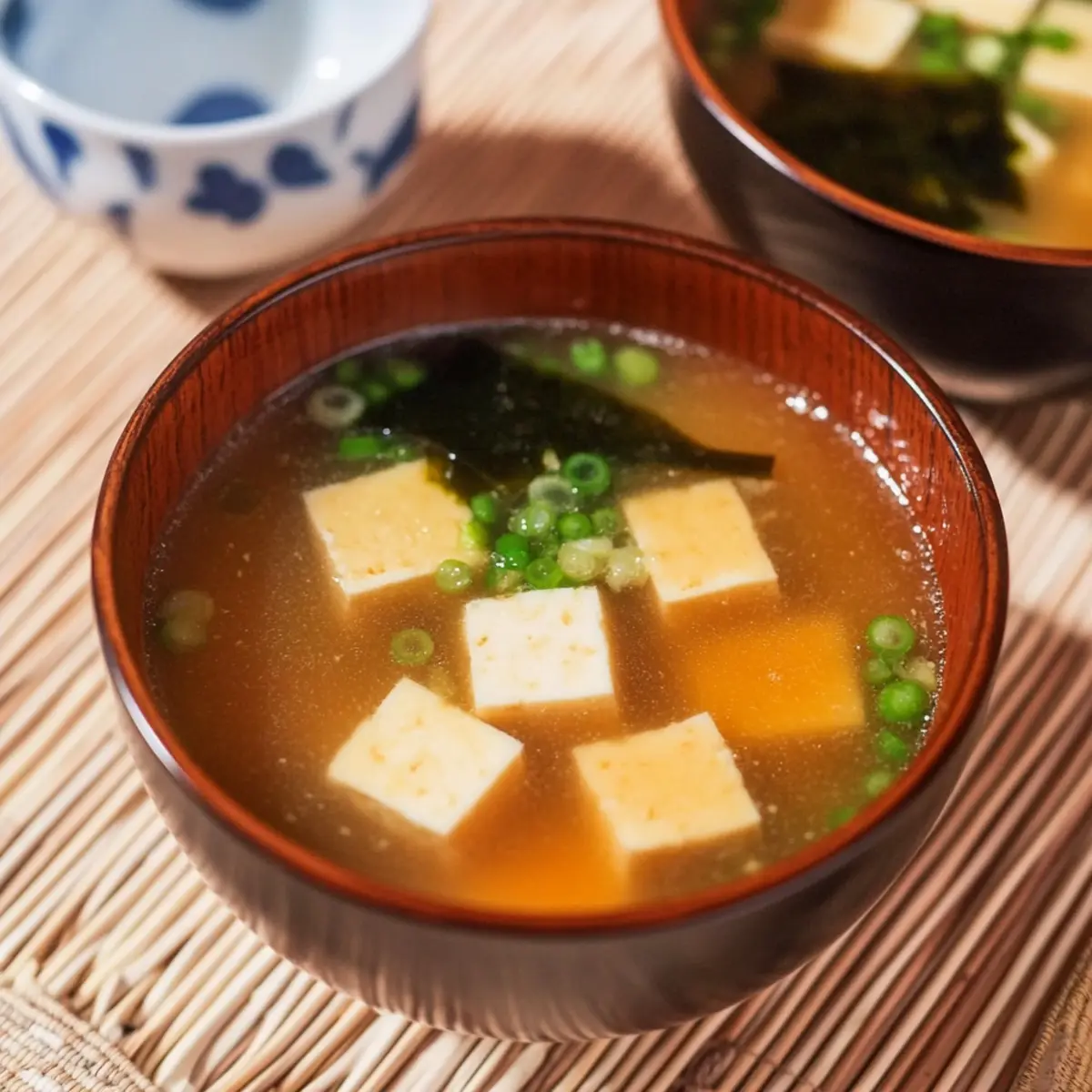
Just the other day, while sipping on a warm bowl of soup, I felt transported to a cozy Japanese kitchen. This Easy Miso Soup not only warms the soul but also serves as a delightful reminder of the joys of homemade meals. Ready in under 10 minutes, this gluten-free recipe has a comforting umami taste and a soothing aroma—perfect for a quick lunch or as a side dish with your favorite Japanese fare. With simple ingredients like tofu and wakame, it’s a nourishing option that won’t have you chained to the stove for hours. Plus, it’s a blank canvas for your culinary creativity, allowing you to add in your favorite veggies or swap in different miso pastes. Curious about how this effortless dish can elevate your everyday meals? Let’s dive into the recipe!

Why Choose This Miso Soup?
Quick, Effortless Preparation: This soup can be ready in under 10 minutes, making it ideal for busy days.
Comforting Umami Flavor: Enjoy the rich and savory taste that miso brings, providing warmth and satisfaction in every bowl.
Versatile and Adaptable: Feel free to experiment by adding your favorite vegetables or changing up the tofu for a fresh twist!
Gluten-Free Goodness: Perfect for those with dietary restrictions, this gluten-free soup is a great way to enjoy a classic dish without compromise.
Perfect Pairing: Serve as a side dish or a starter alongside dishes like Wonton Soup Cozy or Chicken Noodle Soup for a complete meal experience!
Miso Soup Ingredients
For the Base
• Water – The main liquid base for the soup; opting for filtered water enhances the flavors.
• Hondashi Powder – An instant dashi broth alternative that adds depth; feel free to substitute with homemade dashi for a fresher taste.
For the Soup
• Wakame Seaweed – This nutrient-rich ingredient brings texture; cut into smaller pieces for easier consumption or swap with other seaweeds if preferred.
• Tofu – Offers a satisfying protein source; choose silken, soft, or firm based on your texture preference.
For Flavoring
• Gluten-Free Miso Paste – The star ingredient that gives our miso soup its characteristic flavor; ensure it’s gluten-free, and feel free to experiment with white or red miso for different tastes.
For Garnish
• Green Onion – Adds a fresh crunch; can be replaced with chives or omitted if desired.
Step‑by‑Step Instructions for Easy Miso Soup
Step 1: Prepare the Base
In a large saucepan, bring 4 cups of filtered water to a rapid boil over medium-high heat. Once boiling, stir in 1 teaspoon of hondashi powder along with ¼ cup of wakame seaweed, ensuring they dissolve well. Next, add 8 ounces of cubed tofu into the pot. Allow the mixture to come back to a gentle boil before reducing the heat to low. Let it simmer for about 3 minutes, allowing the seaweed to fully rehydrate and the flavors to meld.
Step 2: Incorporate Miso
Turn off the heat, preserving the warmth of your miso soup base. Using a fine mesh strainer or a small bowl, scoop out a cup of the soup and dissolve 4 tablespoons of gluten-free miso paste into the liquid. Stir until the miso is completely blended and smooth. Gradually pour this mixture back into the saucepan, stirring continuously to ensure that the miso paste is evenly distributed throughout the soup for rich flavor.
Step 3: Finish and Serve
Before serving your delightful miso soup, finely slice some green onions and sprinkle them generously on top for a fresh crunch. Serve your warm soup immediately in bowls, allowing the comforting aroma to fill your kitchen. Remember to enjoy this Easy Miso Soup hot, as it is best savored fresh for the fullest flavor and a soothing experience!

Make Ahead Options
These Easy Miso Soup preparations are perfect for busy home cooks looking to save time! You can prepare the soup base (water, hondashi powder, wakame, and tofu) up to 24 hours in advance, storing it in an airtight container in the refrigerator. However, avoid adding the miso paste until just before serving to maintain its delicate flavor. When you’re ready to enjoy your soup, simply reheat the base over medium heat until warm. Then, turn off the heat and dissolve the miso paste as instructed. This way, you’ll have a comforting bowl of miso soup just as delicious as if it were made fresh!
How to Store and Freeze Miso Soup
-
Fridge: Store leftover miso soup in an airtight container for up to 3 days. It’s best to keep the miso separate until you’re ready to enjoy it again.
-
Freezer: For longer storage, freeze the soup without miso in portioned airtight containers for up to 1 month. Miso can be added after reheating for optimal flavor.
-
Reheating: When ready to enjoy, thaw in the fridge overnight if frozen, then gently reheat over low heat. Add miso paste just before serving to maintain its rich, savory flavor.
-
Avoid Duplication: Miso soup is best fresh, so aim to make only what you’ll consume in a couple of days for the best taste and texture.
Expert Tips for Miso Soup
-
Miso Preservation: Avoid adding miso to the soup until you’re ready to eat to keep its rich flavor intact.
-
Strainer Use: If you have a fine mesh strainer, use it for dissolving miso into the soup for seamless incorporation; it prevents clumps.
-
Taste Test: Adjust the miso amount based on your preference—different types like red or white can alter the flavor profile of your miso soup.
-
Ingredient Substitutions: Don’t hesitate to switch out tofu for ingredients like shiitake mushrooms or add veggies like carrots for extra nutrition.
-
Reheating Leftovers: Store leftover soup without miso and gently reheat it. Add miso just before serving to maintain the dish’s delicious taste.
What to Serve with Easy Miso Soup
Warm your heart and elevate your dining experience with a delightful array of sides that complement the comforting essence of this speedy soup.
- Steamed Rice: A scoop of fluffy white rice perfectly soaks up the savory broth, enhancing every delightful spoonful.
- Tonkatsu: The crispy, golden layers of breaded pork offer a satisfying crunchy contrast to the smooth miso soup, making for a balanced meal.
- Japanese Pickles: Add a pop of color and tangy crunch with tsukemono, as their vibrant flavors brighten up each sip.
- Air-Fried Chicken Katsu: Tender chicken coated in a crisp shell pairs beautifully with miso’s umami, creating a satisfying, hearty lunch.
- Sushi Rolls: Light and fresh, these rolls are perfect for dipping in the miso broth, blending the flavors of Japanese cuisine wonderfully.
- Chilled Soba Noodles: A texture twist—cool, chewy noodles tossed in sesame dressing refresh and lightly complement the warm soup.
- Edamame: These slightly salty, tender pods add a sprinkle of nutrition and are a fun finger food alongside your meal.
- Tempura Vegetables: Crispy, lightly battered veggies add a delightful crunch that pairs deliciously with the warm, soothing soup broth.
- Matcha Green Tea: Enjoying a warm cup of this earthy tea alongside miso soup enhances your meal with a gentle, calming experience.
Incorporate these sides for a beautifully balanced meal that warms the soul!
Miso Soup Variations & Substitutions
Feel free to play with this comforting soup, adding your personal touch for an even more delightful experience!
- Mushroom Swap: Replace tofu with shiitake mushrooms for a heartier texture and umami flavor boost. The earthiness of mushrooms beautifully complements the miso.
- Veggie Add-In: Toss in sliced carrots or bok choy for added nutrients and vibrant color. These vegetables will bring a fresh crunch to every spoonful.
- Seaweed Options: If you can’t find wakame, try using dulse or kombu as a flavorful seaweed alternative. Each variety offers its unique taste and nutrition benefits.
- Miso Mix: Experiment with white or yellow miso paste instead of red for a milder, sweeter taste. Adjust the quantity based on your flavor preference; it’s a great way to discover your favorite!
- Spice It Up: Add a pinch of red pepper flakes for a hint of heat. This subtle kick can transform the soup into a more exciting dish.
- Broth Base: If you want a richer flavor, swap out water for homemade vegetable broth. This simple switch enhances depth and adds a warm complexity to your soup.
- Protein Twist: Incorporate edamame or chickpeas in place of tofu for a delightful protein-packed alternative. Each adds its texture and taste while keeping it satisfying.
- Classic Pairing: Serve your miso soup as a starter with other comforting dishes, like Crockpot Thai Soup or Shrimp Corn Soup. The contrasting flavors will make your meal feel complete!
Easy Gluten-Free Miso Soup Recipe FAQs
How do I select the best ingredients for my miso soup?
Absolutely! When selecting ingredients, opt for fresh tofu—look for firm options that are free of dark spots or excessive moisture. Choose wakame seaweed that appears vibrant and dry. For miso paste, check that it’s labeled gluten-free, and consider your flavor preference: white miso is milder, perfect for beginners, while red miso has a deeper, saltier profile.
What’s the best way to store leftover miso soup?
Very! Transfer leftover soup into an airtight container and refrigerate for up to 3 days. To keep the miso’s flavor intact, it’s best to store the soup without the miso. When you’re ready to enjoy it, reheat gently over low heat and stir in the miso paste just before serving.
Can I freeze miso soup? If so, how?
Of course! To freeze, first, allow the soup to cool completely. Pour it into portion-sized airtight containers, leaving some space for expansion, and seal them tightly. You can freeze it for up to 1 month. When ready to enjoy, thaw in the fridge overnight, then gently reheat on the stovetop, adding miso only after warming to preserve its flavor.
What should I do if my miso soup is too salty?
No worries! If your soup turns out too salty, one simple fix is to add more cubed tofu or water to dilute it. If you have extra ingredients on hand, consider adding vegetables like carrots or potatoes—they’ll absorb some of the saltiness while enhancing the soup’s flavor and nutrition!
Are there any dietary considerations I should be aware of?
It’s important! While this miso soup is gluten-free, always check labels for cross-contamination if you have severe gluten allergies. Additionally, if you’re cooking for vegan diets, ensure the hondashi powder number is plant-based or consider making it from scratch using vegetarian ingredients.
How long does miso paste last in the fridge?
Absolutely! Miso paste can last for several months in the fridge if stored in an airtight container. Just make sure to check for any signs of spoilage, such as unusual odors or dark spots, and always use a clean utensil when scooping out the paste to maintain its freshness!

Delicious Miso Soup: Cozy Comfort in Under 10 Minutes
Ingredients
Equipment
Method
- In a large saucepan, bring 4 cups of filtered water to a rapid boil over medium-high heat. Stir in 1 teaspoon of hondashi powder and ¼ cup of wakame seaweed. Add 8 ounces of cubed tofu and let simmer for 3 minutes.
- Turn off the heat. In a small bowl, scoop out 1 cup of soup and dissolve 4 tablespoons of gluten-free miso paste, then pour back into the saucepan.
- Finely slice green onions and sprinkle on top before serving immediately.
Leave a Reply