
Amid the hustle of summer days, there’s a serene joy in preparing a dish that not only feeds the body but also nourishes the spirit. This Easy Vegan Ratatouille is that magic blend, harmonizing fresh, vibrant vegetables with simple ingredients to create a delightful, colorful feast. Whether you’re rushing home after a long day or hosting friends for a weekend brunch, this quick weeknight dinner is your perfect ally, effortlessly fitting into gluten-free, paleo, and Whole30 diets. Plus, it’s a meal that makes leftovers something to look forward to! With every slice of zucchini and layer of eggplant, you’ll be amazed at how this rustic dish can brighten your table. Curious about how to make it shine? Let’s dive into the recipe!
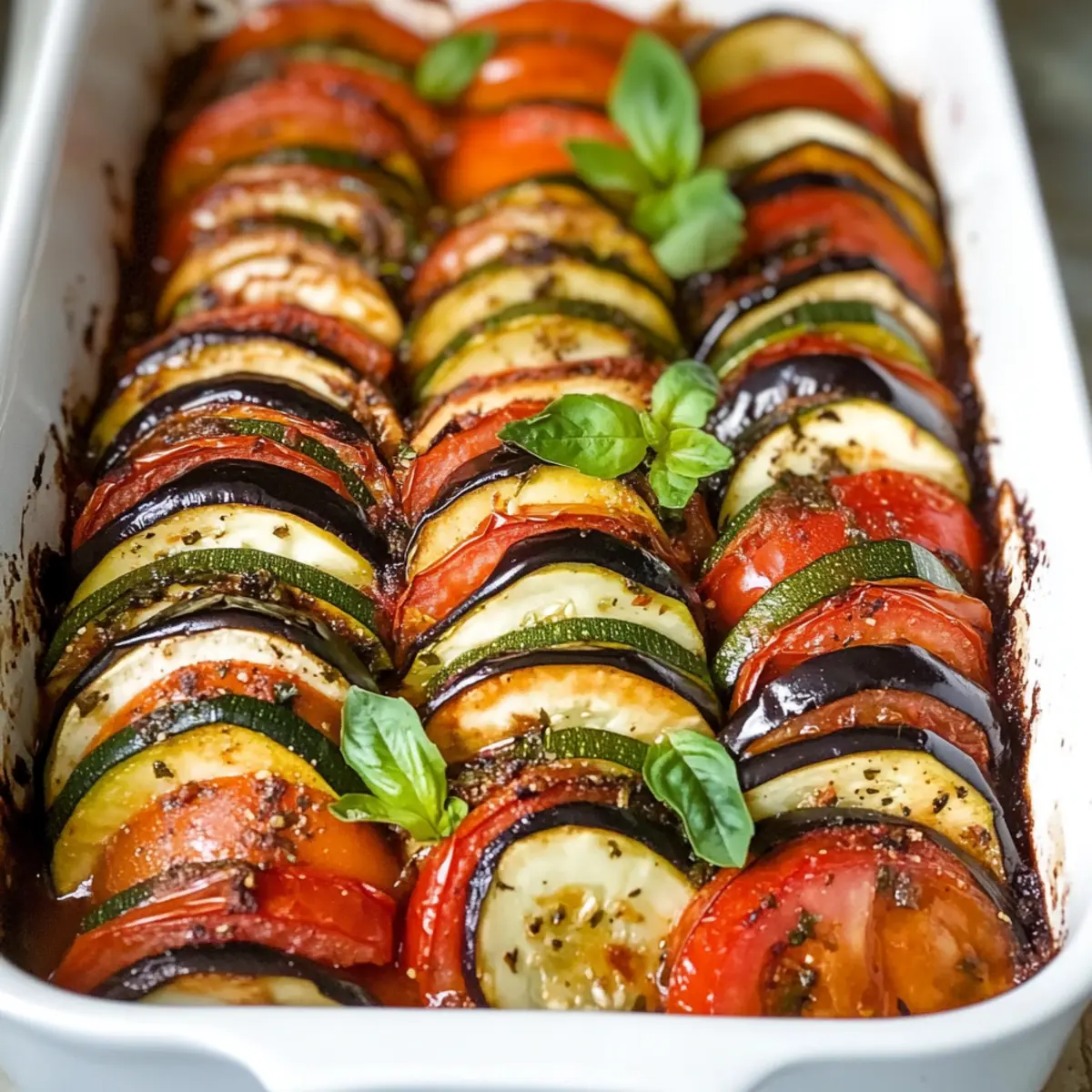
Why is Ratatouille a Must-Try?
Flavor Explosion: This dish showcases the vibrancy of summer vegetables, creating a delicious medley that celebrates fresh, seasonal produce.
Easy Preparation: Even if you’re short on time, its quick cooking method ensures you can enjoy a homemade meal without a fuss.
Versatile as can be: Whether served as a main dish or as a side, ratatouille beautifully complements grilled meats or crusty bread.
Health-Conscious: With its vegan, gluten-free, and paleo profiles, this recipe caters to various dietary needs, making it a guilt-free option you can feel good about.
Crowd-Pleaser: Perfect for gatherings or family dinners, it’s a visually stunning dish that’s sure to impress your guests! Enjoying a side of this with any meal will feel like a gourmet experience!
Ratatouille Ingredients
• Get ready to gather the vibrant components of this seasonal delight!
For the Sauce
- Crushed Tomatoes – Use high-quality canned San Marzano tomatoes for the best flavor.
- Extra Virgin Olive Oil – Opt for a rich olive oil to elevate the taste of the vegetables.
- Apple Cider Vinegar – This balances the dish with just the right amount of acidity.
- Minced Garlic – Fresh garlic cloves provide the perfect savory depth.
- Fresh Basil – Use 3-4 large leaves for robust herbal notes and garnish.
- Herbs de Provence – This French seasoning infuses classic flavor; substitute with dried rosemary, oregano, and thyme if needed.
- Salt – Essential for enhancing all other flavors in this ratatouille.
- Black Pepper – Freshly ground pepper provides warmth and ideal seasoning.
- Chili Powder – Adjust to your preference for mild heat in the dish.
For the Vegetables
- Red Onion – Adds sweetness and crunch; yellow onion can be a substitute.
- Zucchini – Brings tenderness and moisture; consider using yellow squash as a swap.
- Japanese Eggplant – Offers a subtle flavor; substitute with Italian eggplant if you can’t find it.
- Fresh Tomatoes – Incorporate additional juicy layers; Roma tomatoes are highly recommended.
With these fresh ingredients gathered, you’re all set to create a stunning and flavorful ratatouille that’s destined to become a family favorite!
Step‑by‑Step Instructions for Easy Vegan Ratatouille
Step 1: Preheat and Prepare the Dish
Preheat your oven to 350°F (175°C) while you grease a 6″x9″ baking dish with a light drizzle of extra virgin olive oil. This step ensures the vegetables won’t stick during baking and helps them caramelize beautifully, resulting in a delicious flavor for your ratatouille.
Step 2: Make the Sauce Mixture
In a medium bowl, combine the crushed tomatoes, olive oil, apple cider vinegar, minced garlic, and fresh basil. Sprinkle in the herbs de Provence, salt, black pepper, and chili powder. Stir well until everything is evenly blended. This flavorful sauce creates a savory base for your vibrant ratatouille.
Step 3: Layer the Sauce in the Baking Dish
Pour the sauce mixture you’ve just prepared into the bottom of the greased baking dish, spreading it evenly to form a delightful base. You should have a generous layer of sauce that will keep the vegetables moist while baking, adding richness to your Easy Vegan Ratatouille.
Step 4: Slice and Layer the Vegetables
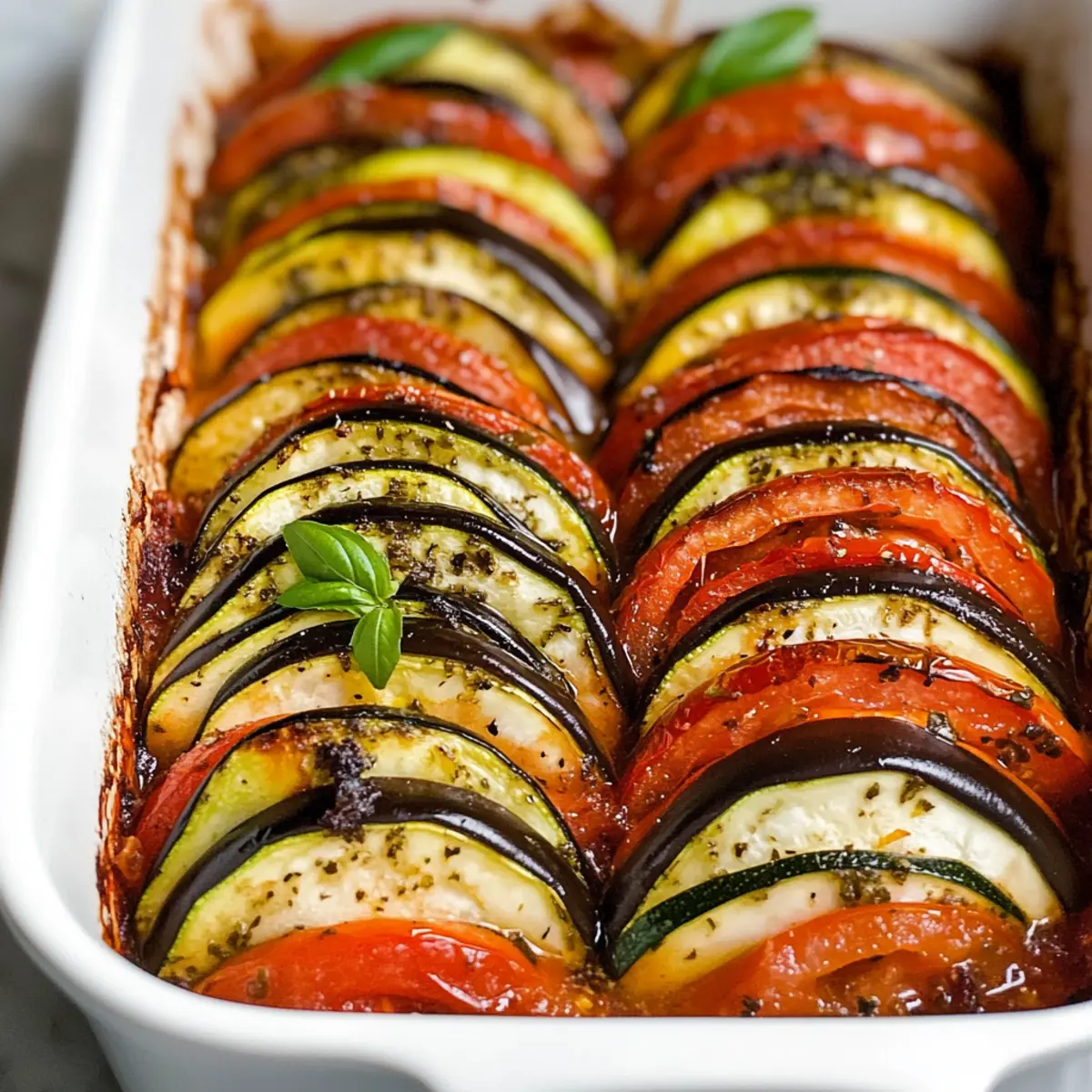
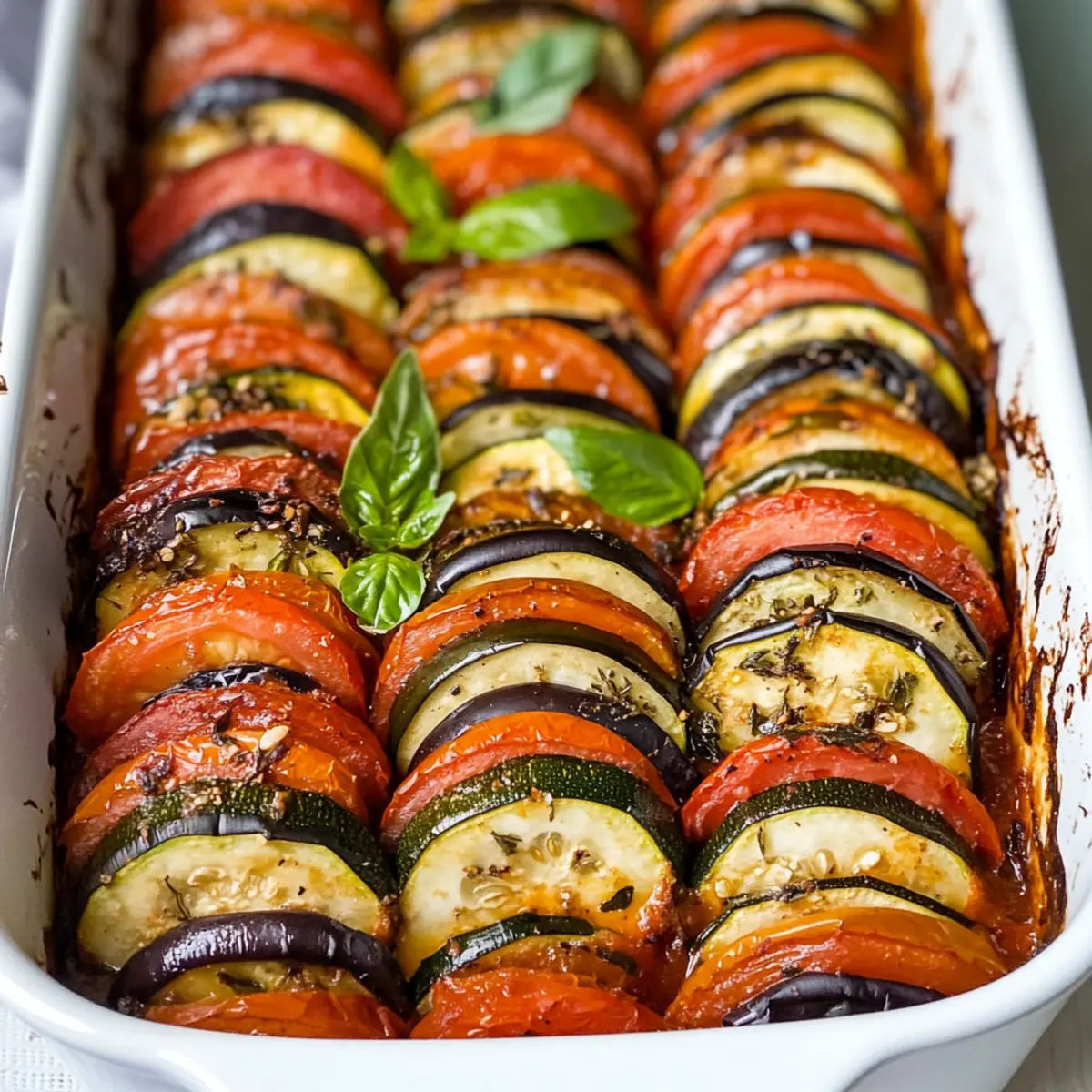
Carefully slice the red onion, zucchini, Japanese eggplant, and fresh tomatoes into uniform thickness of about 1/4 to 1/2 inch. Layer these vibrant slices alternately on top of the sauce, leaning them against the sides of the dish. This beautiful arrangement not only looks appealing but ensures even cooking throughout the ratatouille.
Step 5: Optional Olive Oil Brush
For added flavor and a gorgeous golden finish, you can brush the tops of the layered vegetables lightly with olive oil. This step enhances browning, making your ratatouille not only delicious but also a feast for the eyes!
Step 6: Bake the Ratatouille
Place the assembled dish in the preheated oven and bake for about 1 hour. You’ll know it’s done when the sauce is bubbling and the vegetables are tender but still hold their shape. Keep an eye on it to achieve that perfect, caramelized finish.
Step 7: Garnish and Serve
Once baked, remove the ratatouille from the oven and let it cool for a few minutes. Garnish with additional fresh basil leaves for a burst of color and flavor. Serve warm as a beautiful centerpiece or side dish, experiencing the vibrant tastes of summer with each bite!
What to Serve with Easy Vegan Ratatouille?
Transform your delightful ratatouille into a full-fledged meal by pairing it with these scrumptious options that enhance its vibrant flavors and textures.
-
Crusty French Bread: The perfect vehicle for soaking up the rich tomato sauce, this classic pairing offers a satisfying contrast in texture. Each bite of warm bread complements the vegetable medley beautifully.
-
Fresh Arugula Salad: Add a peppery twist with a light salad dressed in lemon and olive oil. The fresh greens balance the hearty nature of the ratatouille and add a refreshing crunch.
-
Quinoa Bowl: Serve the ratatouille over fluffy quinoa for a nutritious boost, creating a wholesome, protein-packed meal that keeps you feeling full and satisfied.
-
Grilled Chicken or Tofu Skewers: For a protein option, grilled chicken or marinated tofu complements the flavors nicely, adding a smoky char that enhances the depth of the dish.
-
Stuffed Bell Peppers: Elevate your dinner with baked bell peppers stuffed with rice or couscous. Their sweetness pairs wonderfully with the tangy and savory notes of the ratatouille.
-
Lemon Sorbet: Finish your meal on a refreshing note with a scoop of lemon sorbet. The citrusy sweetness cleanses the palate, balancing the savory richness of the previous courses.
-
Light White Wine: A chilled glass of Sauvignon Blanc adds a crisp, refreshing burst that cuts through the richness of the ratatouille, enhancing your dining experience.
Expert Tips for Ratatouille
-
Slice Uniformly: Aim for vegetables sliced at about 1/4 to 1/2 inch thick. This ensures even cooking and a beautiful presentation in your ratatouille.
-
Layering Technique: Alternate your vegetable layers artfully in the baking dish. Leaning each vegetable against the sides not only looks nice but also promotes even baking and tenderness.
-
Quality Ingredients: Use high-quality canned tomatoes and extra virgin olive oil; they play a significant role in the flavor of your ratatouille, so don’t skimp!
-
Baking Time: Keep an eye on your ratatouille as it bakes. Ovens can vary, so check for tenderness and bubbling sauce after about 45 minutes, adjusting the time as needed.
-
Storage Advice: Once cooled, store leftovers in an airtight container for up to 3 days, or freeze for up to 3 months. Reheat thoroughly before enjoying!
-
Garnish Smartly: Add fresh basil just before serving to enhance flavor and freshness—this little touch makes a big difference in presentation and taste!
Ratatouille Variations & Substitutions
Feel free to put your personal stamp on this delightful dish with these fun twists and swaps!
-
Dairy-Free: Try a nut-based cheese for a creamy texture without dairy. Cashew cream adds richness and ties in beautifully with the veggies.
-
Spicy Kick: Add a few slices of fresh jalapeños or a sprinkle of crushed red pepper flakes for a delightful heat. This will elevate the flavors and give your ratatouille a zesty twist!
-
Root Vegetable Delight: Swap zucchini with thinly sliced sweet potatoes or carrots for a hearty version. The sweetness of these root veggies provides a delightful contrast!
-
Herb Infusion: Change the fresh basil to fresh thyme or even dill for a different herbal note. This can give the dish a refreshing spin while still keeping its core flavors.
-
Add More Veggies: Toss in bell peppers or spinach for extra color and nutrition. These can create layers of flavor and really enhance the presentation.
-
Roasted Flavor: Before layering, roast your vegetables for added depth of flavor. Just toss them in olive oil and your choice of seasonings, then layer them into the ratatouille.
-
Protein Boost: Add chickpeas or lend a heartier touch with lentils mixed into the sauce. This keeps it hearty and provides a protein punch, aligning it with your healthy eating goals.
-
Sweet Twist: A sprinkle of brown sugar over the eggplant before baking can enhance the sweetness of the dish. It adds a lovely caramelized note that complements the savory elements beautifully.
Exploring these variations ensures your ratatouille remains a vibrant and exciting dish, meal after meal! Try some of these substitutes or twists to find your favorite version.
Make Ahead Options
These Easy Vegan Ratatouille layers are perfect for meal prep enthusiasts! You can prepare the sauce mixture and slice the vegetables up to 24 hours in advance. Simply combine the crushed tomatoes, olive oil, apple cider vinegar, minced garlic, and herbs in an airtight container (this keeps the flavors vibrant), and refrigerate it overnight. Slice the veggies and store them separately, ensuring they remain fresh and won’t brown. When you’re ready to bake, arrange the vegetables over the chilled sauce, pop it in the oven, and bake as directed. You’ll have a ready-to-love dish that’s just as delicious with minimal effort!
Storage Tips for Ratatouille
Fridge: Store leftover ratatouille in an airtight container for up to 3 days. Reheat before serving to ensure your dish remains delicious and warm.
Freezer: For long-term storage, freeze ratatouille in a freezer-safe container for up to 3 months. Thaw overnight in the fridge before reheating.
Reheating: When ready to enjoy, reheat in the oven at 350°F (175°C) for about 20 minutes or until heated through. You can also use a microwave for a quicker option!
Serving Fresh: For the best flavor experience, enjoy ratatouille shortly after it’s made, as the vibrant taste and texture shine when fresh.
Ratatouille Recipe FAQs
What vegetables are best for Ratatouille?
Absolutely! The key to a great ratatouille lies in using fresh, vibrant vegetables. For a classic combination, include zucchini, eggplant, red onion, and ripe tomatoes. Japanese eggplant offers a subtle flavor, but you can substitute it with Italian eggplant if necessary. Fresh herbs like basil also play a crucial role in enhancing the flavor, making them essential additions.
How do I store leftover Ratatouille?
Leftover ratatouille can be stored in an airtight container in the fridge for up to 3 days. When storing, make sure it’s fully cooled to avoid condensation, which can make it soggy. For longer storage, consider freezing it. It can keep in the freezer for up to 3 months if placed in a freezer-safe container.
Can I freeze Ratatouille?
Yes, you can! To freeze ratatouille, first let it cool completely. Then, transfer it to a freezer-safe container or resealable plastic bags, leaving some headspace for expansion. Label the container with the date. When you’re ready to enjoy it, thaw the ratatouille in the fridge overnight, then reheat it in the oven at 350°F (175°C) for about 20 minutes or until heated thoroughly.
What should I do if my ratatouille is too watery?
If your ratatouille turns out too watery, don’t fret! This usually happens if the vegetables release excess moisture. To remedy this, you can drain some of the liquid while cooking. Alternatively, let it simmer on the stovetop for a little while to encourage evaporation. For next time, slicing your vegetables a bit thicker can help retain their structure and moisture better.
Is Ratatouille safe for pets or people with allergies?
Ratatouille is generally safe for most people and can be adjusted for dietary restrictions. However, if you have specific allergens, it’s best to check each ingredient. For pets, avoid sharing any meals with garlic or heavy spices, as those can be harmful to them. Always consult with your vet if uncertain about a specific food.
How can I spice up my Ratatouille?
If you want to add a bit more excitement to your ratatouille, consider adding bell peppers for sweetness or even a dash of hot sauce for a spicy kick. You can also incorporate fresh herbs like thyme or parsley for additional flavors. Experimenting with different vegetable combinations can also lead to delightful surprises!
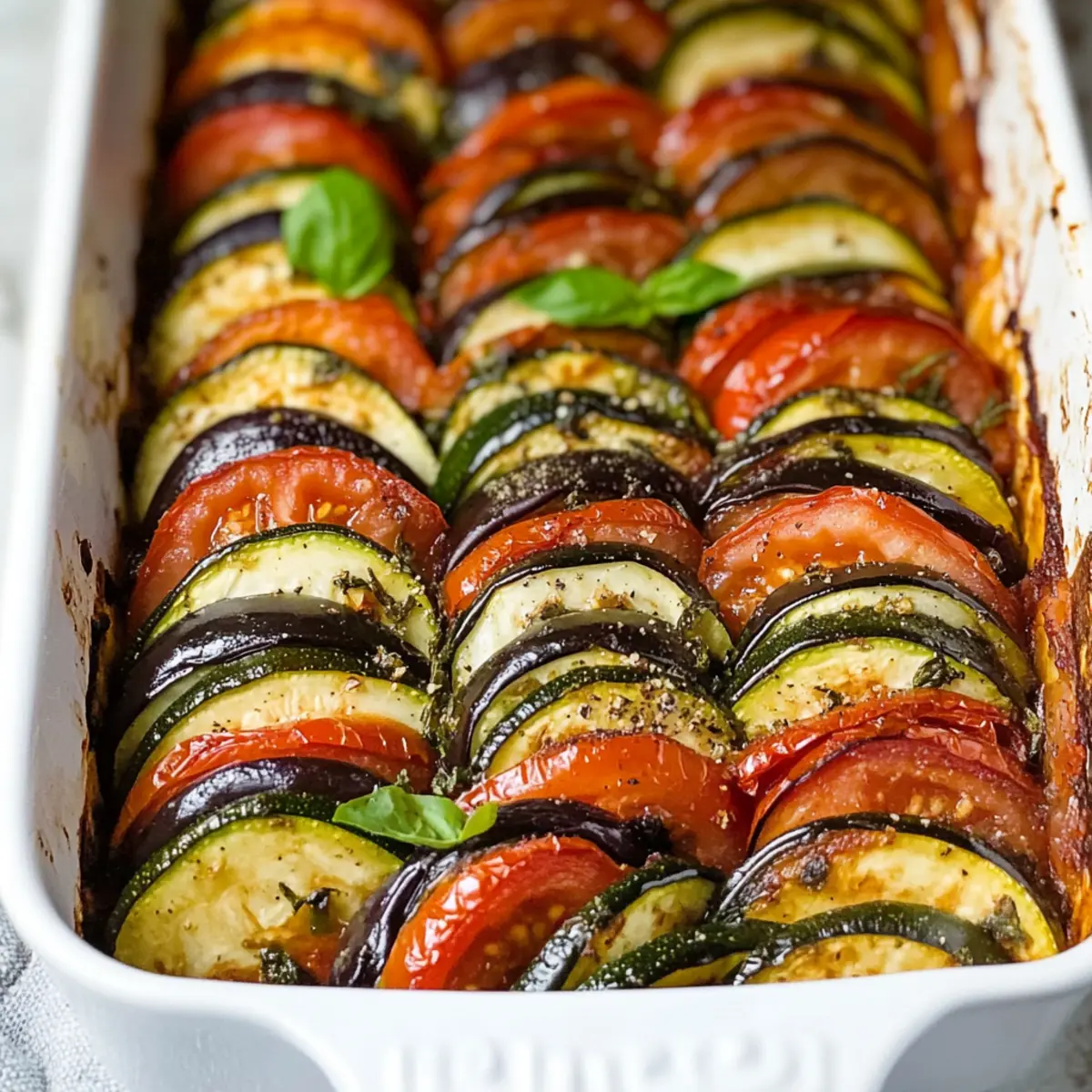
Savory Ratatouille: A Colorful Summer Favorite to Savor
Ingredients
Equipment
Method
- Preheat your oven to 350°F (175°C) and grease a 6"x9" baking dish with olive oil.
- In a medium bowl, combine crushed tomatoes, olive oil, apple cider vinegar, minced garlic, and fresh basil. Add herbs de Provence, salt, black pepper, and chili powder. Stir well.
- Pour the sauce mixture into the greased baking dish, spreading it evenly.
- Slice red onion, zucchini, Japanese eggplant, and fresh tomatoes into uniform thickness. Layer the slices alternately on top of the sauce.
- Optional: Brush the tops of the layered vegetables with olive oil for extra flavor.
- Place the dish in the oven and bake for about 1 hour until the sauce is bubbling and vegetables are tender.
- Let it cool for a few minutes, garnish with fresh basil, and serve warm.
Leave a Reply